Why finding high-quality free online courses matters (and how this guide helps)
Lots of people want to learn new things or get better at their jobs in 2026. They often search for "udemy free courses" or ask "how to get free courses in coursera." The big idea is simple: learning shouldn’t always cost money. There are many great things to learn for free.
But here’s a common problem: finding truly good, up-to-date free online courses can be tricky.

Sometimes, courses that say they are free actually have hidden costs. Other times, they might not be very helpful, or they are outdated. It can feel like a treasure hunt with many false clues. You want to learn, but you don’t want to waste your time on low-quality content. This is especially true when you are looking for important skills like those you might find in Best Free Online Courses in 2026: The Ultimate Guide.
Actually, finding excellent free courses is a smart way to grow. It helps you get new skills without breaking your budget. This guide is here to help you solve that problem. We’ll show you how to find real "udemy free courses" and explore ways to get "coursera free courses" that truly teach you something useful. We’ll also look at getting valuable "google certification free courses" and more.
In this guide, you will learn how to find free courses on different learning websites. We will give you simple checklists to help you decide if a course is good before you start. We’ll share smart tips to keep learning free and make sure it actually helps you grow. If you’re wondering about specific platforms, you might find our insights on Are Coursera Courses Free? Audit Top Management and Nutrition Courses helpful too. Get ready to learn more for less, starting today!
Finding great free online courses is like knowing the secret spots to look. Each big learning website has its own way to help you find classes that don’t cost money.
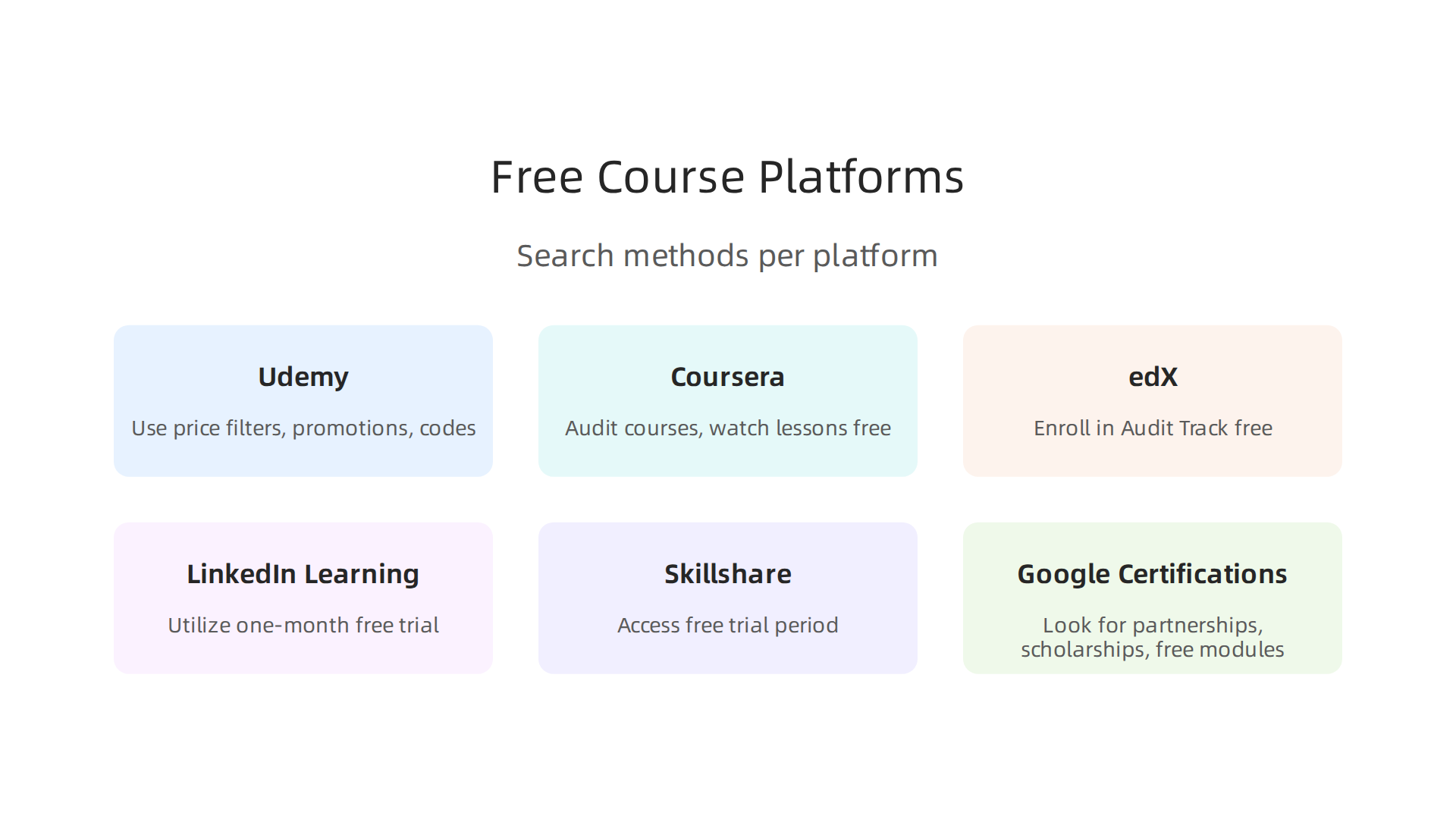
Here’s where to start your search on the most popular platforms in 2026.
Udemy
Udemy is known for having a huge number of courses. To find udemy free courses, use their search bar and filters. After you type what you want to learn, look for a filter option that says "Price" or "Cost." Choose "Free" from that list. This will show you all the free classes on that topic. Sometimes, instructors offer their courses for free for a short time as a promotion. You might also find free Udemy courses through special codes or links shared by course creators.
Coursera
Coursera works a bit differently. While many courses require payment for a certificate, you can often "audit" them for free.
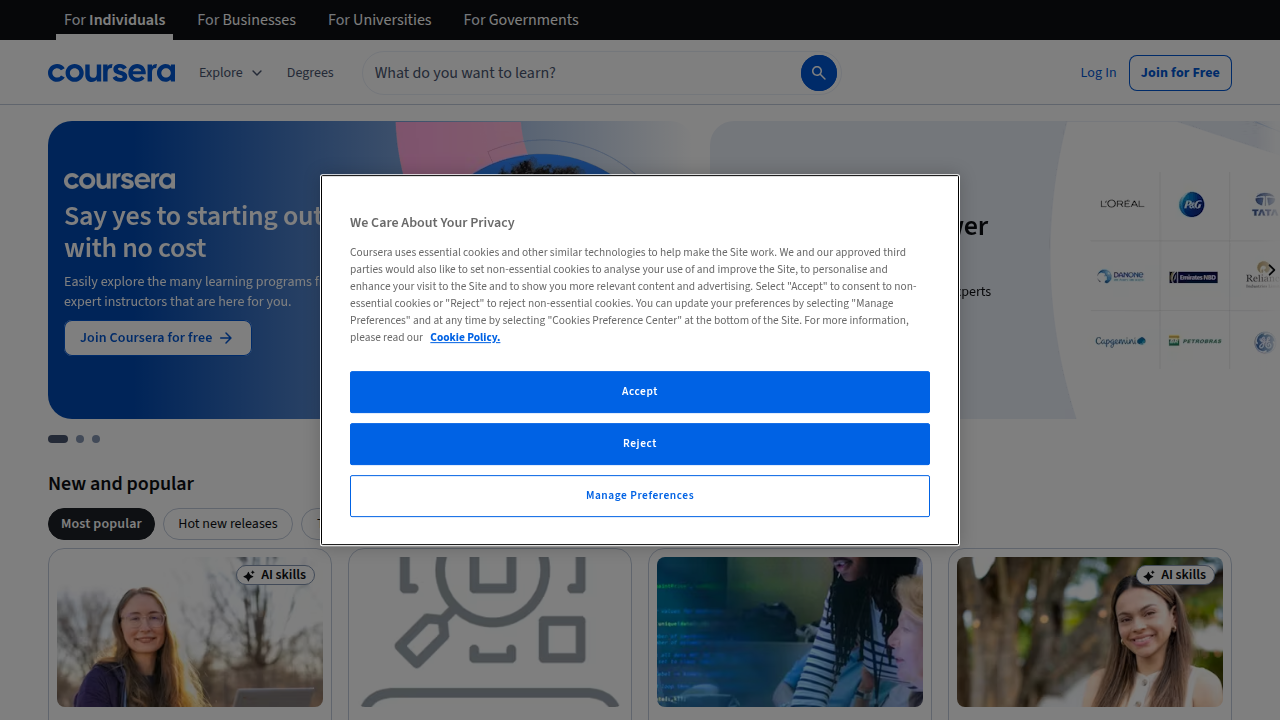
Auditing means you can watch all the lessons, do practice quizzes, and learn everything without paying. You just don’t get a certificate or graded assignments. To learn how to get free courses in coursera, search for a course and then look for a link that says "Audit" or "Enroll for Free" without the certificate option. This is a fantastic way to access high-quality content from top universities.
edX
Similar to Coursera, edX offers many courses from famous universities and companies where you can learn for free.
They call these "audit track" courses. When you find a course you like on edX, look for the option to enroll in the "Audit Track" or "Free Audit." This lets you see the course materials and most lectures. If you later decide you want a verified certificate, you can often pay a fee to upgrade. edX is a reliable place for finding free courses, often from institutions like Harvard and MIT, as noted by edX itself.
LinkedIn Learning and Skillshare
These platforms are generally subscription-based, meaning you pay a monthly fee. However, they almost always offer a free trial period. This is a smart way to get many hours of learning for free.
- LinkedIn Learning often has a one-month free trial. You can take as many courses as you want during that time. Just remember to cancel before the trial ends if you don’t want to pay.
- Skillshare also provides a free trial, usually for a week or two. This is great for trying out several project-based classes.
These trials are perfect for binge-learning a skill quickly or testing out if the platform is right for you.
Google Certification Free Courses
Google offers many valuable certifications that can boost your career. While some require payment, there are ways to find google certification free courses or programs that lead to them. Google often partners with other platforms or offers introductory modules for free. You can also look for programs that provide scholarships or free access to Google’s career certificates, especially through non-profit organizations or government initiatives. Some websites even list over 100 free online courses that offer certificates, including from Google and other big tech companies, which can be found in guides like 100+ Free Online Courses with Certificates 2026.
Community and Third-Party Websites
Beyond the platforms themselves, many websites and online communities share daily updates on free courses and temporary promotions. These sites collect information about courses that are usually paid but are being offered for free for a limited time. Searching for "free online course deals" or joining learning-focused online groups can help you discover these short-term offers. They often highlight free classes from Udemy, Coursera, and others, including free online computer courses for beginners to build career ready digital skills.
Remember to always check the course details to make sure it’s truly free and offers the learning experience you’re looking for!
Learning how to find udemy free courses is super easy once you know the tricks. We already talked about using the "Price" filter, but there’s more to it. Let’s dig deeper into getting the most out of Udemy without spending money.
How to find and filter Udemy free courses (plus coupons and instructor promos)
Finding the perfect udemy free courses involves a few steps beyond just clicking the "Free" filter. Here’s how to sharpen your search:
- Using Filters and Sorting: When you search for a topic on Udemy, always go to the "Price" filter and pick "Free." After that, look at the "Sort by" options. You can sort by "Newest" to see recently added free courses, or "Most Reviewed" to find free courses that many people liked.
- Smart Keyword Searches: Try searching for terms like "free [your skill here]" or "100% off [your skill here]" directly in the search bar. This can sometimes bring up courses that are temporarily free.
- Limited-Time Offers: Instructors on Udemy often make their paid courses free for a short time. This is usually to get more students and reviews. These courses might not always appear with the standard "Free" filter. You have to keep an eye out for them.
Finding Udemy Coupon Codes
Many websites help you find Udemy courses that are usually paid but are made free with special codes. These codes are like secret keys that unlock the course for you.
- Instructor Promotions: Course creators love to share coupons. You can often find these codes on their social media pages, personal websites, or in their email newsletters. If you follow an instructor you like, they might send you a free coupon.
- Official Udemy Deals: Udemy itself often runs big sales and promotions. Sometimes, they offer courses for very low prices, or even totally free, for a short period. Keep an eye on your email from Udemy for these announcements. You can also find general discounts and codes on sites like Udemy Coupon: 40% Off Or More – June 2026 – Groupon or Udemy Coupons : 97% OFF Promo Codes | Jun 2026 – GrabOn.
- Third-Party Coupon Sites and Communities: There are websites and online groups fully dedicated to sharing current 100% off
udemy free coursescoupons. These sites often update daily with new codes. A great example is Real Discount: Free Udemy Courses & Coupons, which lists many premium courses you can get for free. You can also find communities that share these codes, like the ones highlighted in videos about Udemy 100% OFF Coupons 2026. Another good resource is a site that regularly updates a List of Udemy free courses with coupon codes. - Checking Coupon Validity: Always make sure to check the coupon code’s end date. These free deals often last only a few days. If a code doesn’t work, it usually means it has expired or too many people have used it.
By using these methods, you can greatly increase your chances of finding valuable udemy free courses and learning new skills without any cost. When you’re ready to explore more platforms and how they can boost your thinking skills, consider checking out other resources to help you choose the best online learning platforms for critical thinking in 2026.
Free learning options beyond Udemy: Coursera audit, edX audit/verified paths, YouTube, and MOOCs
While finding udemy free courses is a great way to learn, many other platforms offer excellent free education too. These often work a bit differently than Udemy’s completely free courses or coupon deals. Let’s look at some other choices like Coursera, edX, YouTube, and MOOCs.
Coursera and edX: Learning for Free with "Audit" Options
Coursera and edX are popular online learning sites that partner with top universities and companies. They offer many courses where you can learn for free by choosing the "audit" option.
- What is an Audit Course? When you audit a course, you get free access to most of the learning materials. This means you can watch video lectures, read course readings, and sometimes even take practice quizzes. It’s a wonderful way to gain knowledge without spending any money. Many Coursera courses let you audit them for free to learn things like financial statement analysis or risk assessment Best Audit Courses & Certificates [2026] – Coursera. You can often find a step-by-step guide on How to Audit a Course in Coursera (Step-by-Step Free Access Guide).
- What You Don’t Get with Auditing: The main difference between auditing and paying for a course is that audit learners typically don’t get graded assignments, feedback from instructors, or a certificate of completion at the end What is the Difference Between an Audit and Paid Course on …. For example, edX allows free auditing for many courses, but without a verified path, you won’t earn a certificate Auditing an edX class | edX.
- Verified Certificates: If you need a certificate to show for your learning, you’ll usually have to pay for the "verified" or "paid" track. These certificates can be important if you’re looking to impress employers or use the course for college credit Coursera vs. EdX – Studley AI. However, for just learning a new skill, the free audit option is perfect.
Other Great Free Learning Resources
Beyond Coursera and edX, there are many other ways to find free courses and educational content.
- YouTube Playlists: YouTube is a treasure trove of knowledge. Many educators, universities, and experts create entire playlists that act like full
udemy free courses. You can find detailed lessons on almost any topic, from coding to cooking. Just search for "[your topic] tutorial playlist" or "[subject] full course." - MOOCs and University Websites: MOOCs, which stands for Massive Open Online Courses, are often hosted by universities directly. These can be similar to Coursera or edX courses, but sometimes are entirely free from start to finish. Many universities also put free lectures and learning materials directly on their own websites.
- Platform Partnerships and Free Certifications: Some big tech companies offer
google certification free coursesor other free training through partnerships or their own learning hubs. These can be very valuable for getting job-ready skills. For more about certifications that can help your career, you might want to learn about Google Certifications That Pay Off in 2026. - Free Online Computer Courses: If you’re new to technology, there are tons of free online computer courses specifically designed for beginners to help you build important digital skills. You can explore Free Online Computer Courses for Beginners to Build Career Ready Digital Skills for some ideas.
By exploring these options, you can get free access to high-quality education and keep learning new things every day. It’s all about knowing where to look!
But once you find these courses, how do you know if they are actually good? It’s important to check the quality of any course, even if it’s free. This helps you make sure you’re spending your valuable time on something truly helpful. This is true whether you’re looking for udemy free courses or free lessons on other platforms like coursera free courses.
How to evaluate course quality and instructor credibility (a checklist)
Picking a good online course, even a free one, means looking at a few key things.
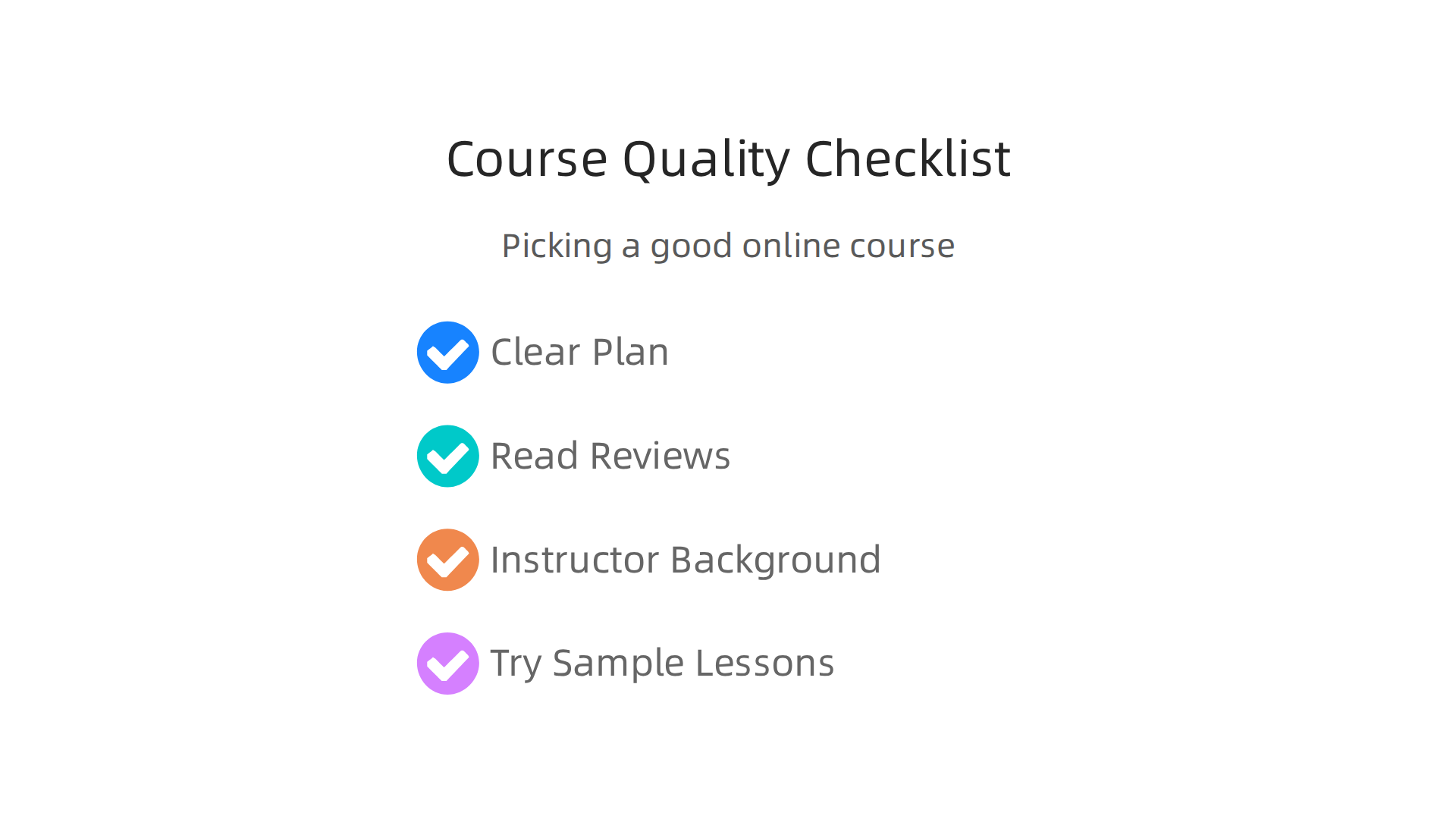
You want to make sure the course will teach you what you need and that the person teaching it knows their stuff. Here’s a simple checklist to help you decide.
Look for a Clear Plan (Syllabus)
First, try to find the course syllabus or a detailed overview. This is like a map for the course. It should tell you:
- What you will learn.
- What topics will be covered each week or lesson.
- What skills you will gain by the end.
A good course will have clear goals. If you can’t easily find out what the course is about or what skills it will give you, that’s a red flag. Clear instructions for starting the course and easy navigation are also important for student success Student Feedback on Quality Matters Standards for Online Course Design.
Read Course Reviews Wisely
Many platforms let students leave reviews. This feedback can be very helpful, but you need to read it carefully.
- Look for detailed comments: Reviews that say "This course was great!" aren’t as helpful as reviews that explain why it was great, or why it wasn’t.
- Check the dates: Is the review recent? Course materials can get old quickly, especially in fast-changing fields like technology.
- See if the reviews match your goals: What was good for one person might not be what you need.
- Understand common quality standards: Online courses often follow certain quality guidelines to make sure they are effective Standards for Quality Online Courses.
Check the Instructor’s Background
Who is teaching the course? Knowing this helps you trust the information you’re getting.
- Look for experience: Does the instructor have real-world experience in the topic?
- Check their credentials: Do they have degrees, certifications, or work history related to what they’re teaching? For example, if you’re interested in tech, you might look for instructors with experience in areas relevant to
google certification free courses. - Search for them online: A quick search can tell you more about their professional work and reputation.
Try Sample Lessons
Before you fully commit, see if there are any free preview videos or sample lessons. This is a great way to:
- See the teaching style: Does the instructor explain things clearly? Is it easy to follow along?
- Check the video and sound quality: Poor quality can make learning harder.
- Get a feel for the course materials: Are the readings and activities well-made?
Even for free courses, you want a good learning experience. Trying a sample is like testing a new car before you buy it.
Your Quick Course Quality Checklist
Use these questions to quickly size up any online course:
- Is there a clear syllabus or course overview that tells you what you’ll learn?
- Are the student reviews mostly positive and detailed, especially recent ones?
- Does the instructor have good experience and knowledge in the subject?
- Can you preview some lessons to see if the teaching style fits you?
By asking these simple questions, you can make sure that the udemy free courses or other online learning options you pick are truly valuable for your goals. If you’re looking into specific types of free courses, you might also be interested in how to choose Are Coursera Courses Free Audit Top Management and Nutrition Courses that are right for you.
Now that you know how to pick good quality free courses, let’s talk about how to use them to build something bigger. Imagine putting together different pieces of a puzzle to make a full picture. That’s what it’s like to build a learning pathway with udemy free courses or lessons from other sites. You can combine them to show what you’ve learned to employers or for college credit.
Building a Free Learning Pathway: Combining Free Courses into a Credential-Ready Portfolio
Learning doesn’t have to stop after one course. You can stack free lessons to become really good at something. Think of it like this:
- Start with the basics: Find a free course that teaches you the main ideas of a topic.
- Add more skills: Then, find other
coursera free coursesor free lessons that teach you more advanced parts of that same topic. - Practice with projects: Many free courses have small projects. Do them! They help you show what you can actually do, not just what you know.
By doing a few related free courses and making sure you practice, you build a "portfolio" of your work.

This portfolio can be a collection of projects, writings, or designs that show off your new skills. It’s proof that you can do the job, even without a fancy certificate.
Free Learning vs. Verified Certificates
Many online platforms let you take courses for free in what’s called "audit mode." This means you can watch all the videos and read the materials. It’s a great way to learn without paying a dime. For example, you can learn how to get free courses in coursera by using the audit option for many classes. However, audited courses usually don’t give you a graded certificate What is the Difference Between an Audit and Paid Course on Coursera.
If you want a paper that proves you finished the course, you usually have to pay. This is called a "verified certificate." It shows that you not only took the course but also completed the graded assignments. For example, edX offers a free audit track for many courses but if you want a verified certificate, you need to pay What are the differences between audit (free) and verified (paid courses) on edX. Employers often look at these verified certificates differently than just saying you took a free class Coursera vs. EdX – Studley AI.
Other Ways to Show Your Skills
Even if you can’t afford a paid certificate, you still have options:
- Project Portfolios: This is the best way to show off your skills from
udemy free coursesor any other platform. If you learned graphic design, show your designs. If you learned to code, show your code. These practical examples are very powerful. - Microcredentials: These are smaller certificates that show you’ve learned a specific skill, not a whole degree. Think of them as tiny badges for specific talents. Some platforms offer them at a lower cost than a full program.
- Open Badges: Some free learning sites offer "open badges" that you can add to your online profile. These are like digital awards for completing certain lessons or tasks.
- Aim for recognized programs: If you’re looking for skills that directly lead to jobs, try to find free courses that align with recognized programs like
google certification free courses. These can set you up for respected industry credentials.
By being smart about how you choose and combine your free online courses, you can build a strong set of skills and show them off, even if you don’t spend a lot of money. If you’re thinking about specific credentials, you might want to learn more about Google Certifications That Pay Off in 2026.
Even after you’ve learned how to choose great free courses and build your portfolio, there’s a big challenge: finding those amazing deals before they’re gone! Many free course offers, especially for paid classes that become free for a short time, are like hidden treasures. You need smart ways to find them. Luckily, in 2026, there are many tools and tricks to help you grab those udemy free courses or free lessons from other sites without much effort.
Advanced Tips: Automation, Newsletters, Community Deals, and Staying Current
Finding free courses doesn’t have to be a full-time job. You can set up systems that do most of the work for you.

Think of it as having your own little helper that tells you when a great free learning chance pops up.
Tools to Automatically Find Free Courses
- RSS Feeds and Alerts: Many websites that list free online courses, like those offering
udemy free courses, have something called an RSS feed. This is a special link that sends updates to a program you use. When a new free course is added to the site, your RSS reader tells you. You can also set up Google Alerts for terms like "free Coursera courses" or "discounted online learning" to get emails when new pages mentioning these appear. - Coupon-Tracking Websites and Newsletters: A great way to get paid courses for free is by looking for coupon codes. Many websites collect these special codes that make a course 100% free for a limited time. For example, sites often list current Udemy coupon codes that can give you free access to courses that usually cost money Udemy 100% OFF Coupons 2026. Some even list 97% off promo codes Udemy Coupons : 97% OFF Promo Codes | Jun 2026. You can also sign up for email newsletters from these sites. They’ll send you a list of new
udemy free coursesorcoursera free coursesstraight to your inbox. This saves you from having to check many websites every day. Websites like Coursesity and Real.Discount are good places to start looking for lists of free courses with coupon codes 50000+ Free Udemy Courses [2026] or to discover thousands of premium courses completely free Real Discount: Free Udemy Courses & Coupons. - Online Communities and Social Media: There are many online groups and communities where people share free course deals. These can be on social media, special forums, or even chat apps like Telegram
100% OFF Udemy Coupon codes 2026 | Course Coupon Club. People in these groups are often quick to share when a new coupon or a limited-time free course appears. It’s a bit like having many friends looking for deals for you. You can also find great newsletters about specific topics, like AI, that might also mention free learning opportunities 10 Best Free AI Newsletters in 2026.
Setting Up a Simple Workflow
To make finding free courses easy and useful, try this simple plan:
- Pick Your Top Topics: First, decide what skills you want to learn. Do you want
free online computer courses for beginners to build career-ready digital skills? Or something else? Having a clear goal helps you focus. - Subscribe Smartly: Join a few key newsletters or follow a couple of trusted social media groups that share free courses. Don’t sign up for too many, or your inbox will get too full!
- Quick Check-in: Once a week, quickly look through the new offers. Does anything match your learning goals? Is it a
google certification free coursesopportunity you’ve been waiting for? - Act Fast for Time-Limited Offers: Many free course deals last only a few days. If you see something perfect, grab it right away! Enroll even if you don’t start it immediately. Once you’re enrolled, it’s usually yours for good.
By using these advanced tips, you can spend less time searching and more time learning. It helps you stay current with new skills and find quality education without breaking the bank.
Summary
This guide shows practical ways to find high-quality free online courses across platforms like Udemy, Coursera, edX, LinkedIn Learning and Skillshare, plus routes to Google certifications and other career-focused training. It explains platform-specific tricks — using Udemy filters and coupons, auditing Coursera/edX courses, and using free trials — and gives a clear checklist to judge course quality before you invest time. You’ll learn how to combine free classes into a skills pathway or portfolio that employers can see, and when a paid verified certificate is worth it. The article also covers tools and workflows (RSS, coupon sites, newsletters, communities) to catch limited-time offers and automate discovery. After reading, you’ll know where to look, how to evaluate options fast, and how to capture and organize free learning that truly advances your career.