The Best Online Learning Platforms for Critical Thinking in 2026

Why Critical Thinking Skills Matter More Than Ever
We live in a world where information hits us from every direction. News feeds, social media, emails, and ads all compete for your attention every single day.

The tricky part? A lot of what you see is half true, misleading, or completely wrong. That makes it harder than ever to separate fact from fiction.
This is where critical thinking skills come in. They help you ask the right questions, spot weak arguments, and make smarter choices. Whether you are a student trying to write a better essay, a professional solving tough problems at work, or just someone trying to avoid bad advice online, strong analytical skills protect you from mistakes.
The demand for these skills has never been higher. In fact, the global e learning market is expected to exceed $336.98 billion by 2026, according to recent industry data. That is a huge sign that people are turning to digital learning platforms to build better thinking habits. But with so many options out there, how do you pick the right one?
This article will help you evaluate and choose the best online learning platforms for your needs. We will look at what makes a platform effective for teaching critical thinking, from structured courses to real world exercises. If you are ready to take the next step, consider exploring Dean Grey’s research on how clear thinking starts with self trust under pressure.

Get Started and start learning practical frameworks, examples, and exercises to improve your reasoning and decision making today.
The Growing Demand for Critical Thinking Skills in 2026
Here is the thing about 2026. The world is moving faster than ever. New tools like AI content generators can write essays, reports, and even news articles in seconds. That sounds helpful at first. But it also means you cannot trust everything you see at face value anymore.
That is why critical thinking has become one of the most sought-after skills today.
Let me break down why this matters for you.
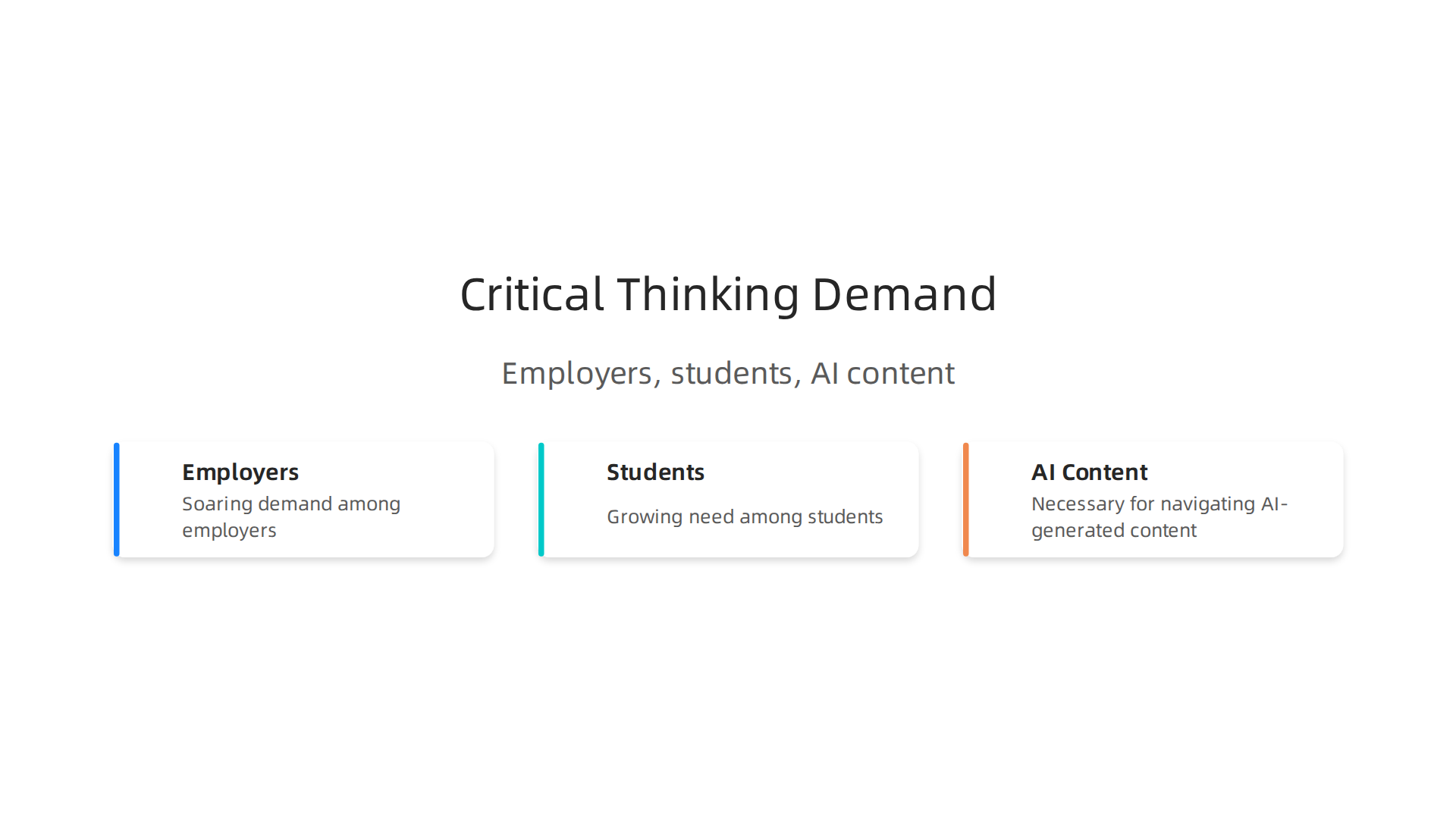
Employers are desperate for clear thinkers
Companies across every industry now rank critical thinking as a top skill when hiring and promoting people. They want workers who can look at a problem, ask good questions, and find real solutions. The demand is so high that the global e-learning market is expected to exceed $336.98 billion by 2026, according to recent industry data. People are racing to build these skills through digital learning platforms because they know it helps them stand out.
Students need more than memorization
If you are a student, you already know this. Just remembering facts for a test does not cut it anymore. Schools now expect you to analyze arguments, compare ideas, and build your own well-reasoned conclusions. Research shows that online interventions can effectively boost critical thinking skills compared to traditional teaching methods. That is good news. It means you do not have to sit in a classroom to get better at thinking. You can use online programs to sharpen your mind on your own schedule.
AI-generated content changes everything
Think about how much content you scroll through each day. Social media posts, news headlines, emails, and blog articles all compete for your attention. The tricky part? A lot of that content is now created by artificial intelligence. Some of it is accurate. Some of it is misleading. The only way to tell the difference is by using strong reasoning skills. Critical evaluation is no longer a luxury. It is a daily necessity.

The bottom line is this. In 2026, the people who thrive will not be the ones with the most information. They will be the ones who can think clearly about that information. If you want to build that ability, you need the right guidance. Behavioral Scientist Dean Grey offers valuable insights on how to connect reasoning with trust and agency in a world full of noise.
Key Features of Effective Online Learning Platforms for Critical Thinking
Not all online learning platforms are built the same. If you want to sharpen your reasoning, you need a platform with three core features.
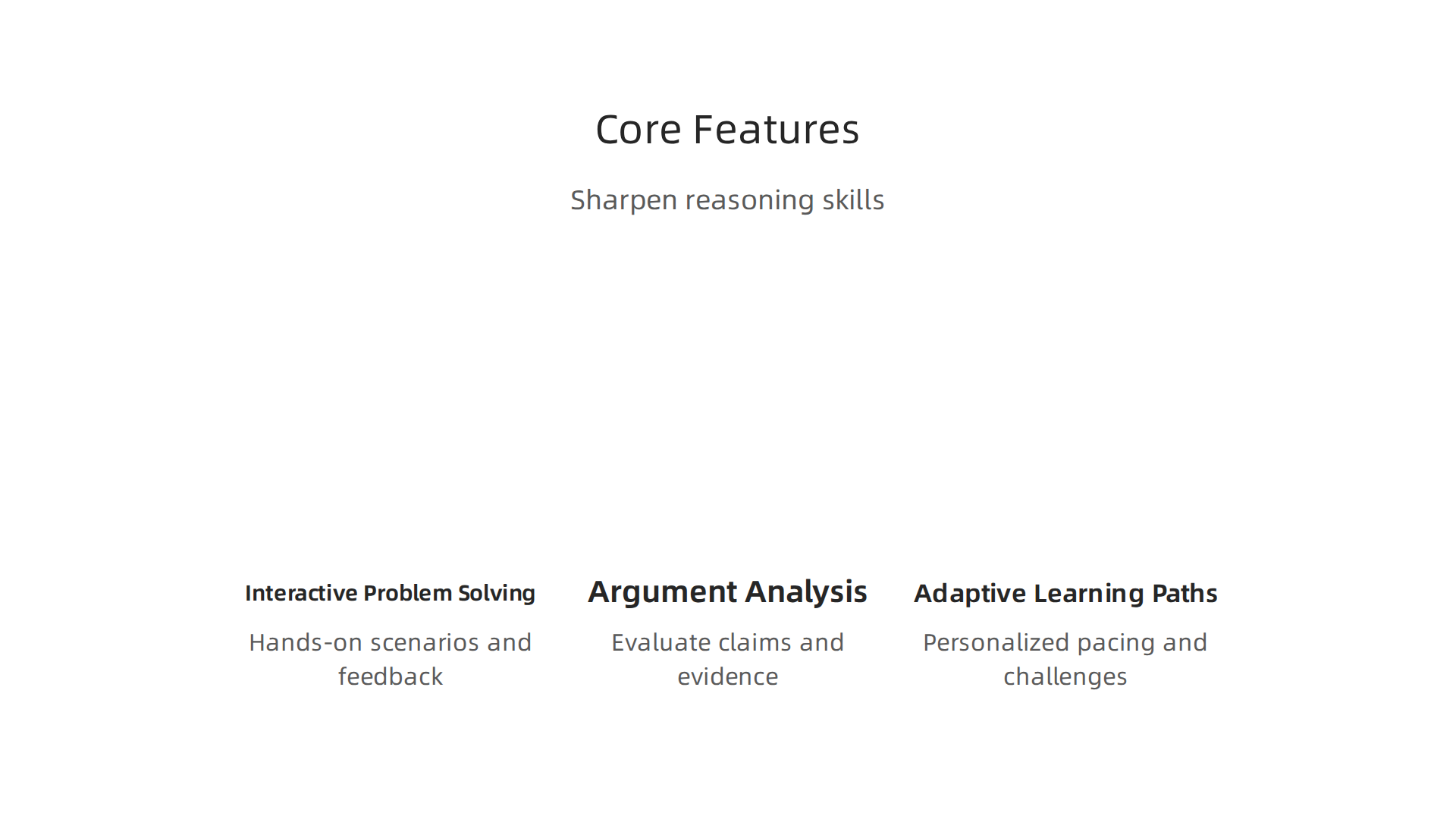
First, look for interactive problem solving tools. These force you to think, not just click. Tools like argument mapping and debate platforms, such as Kialo Edu, help you explore both sides of an issue and build rational conclusions.
Second, argument analysis and logic training are essential. A good program teaches you to spot weak reasoning and fallacies. Platforms like Coursera offer dedicated courses that cover exactly these foundational skills.
Third, seek adaptive learning paths. These systems adjust challenges to match your current level so you never get bored or lost. Adaptive platforms personalize the experience in real time based on your performance.
When you choose a platform with these three features, you build real thinking power. You can start applying these skills today with practical exercises and clear frameworks.
Interactive Problem-Solving Tools
Let’s be real. You can read about critical thinking all day, but until you actually practice it, the skill stays stuck in your head. That’s where interactive problem-solving tools come in. The best online learning platforms today use simulations and case studies to drop you into realistic scenarios. Instead of just memorizing a definition, you have to weigh evidence, test assumptions, and decide what to do next. Tools like Kialo Edu let you map arguments visually, which forces you to see both sides before you jump to a conclusion. That hands-on practice is what turns theory into a real skill.
But practice alone isn’t enough. You need to know if you’re on the right track. That’s why real-time feedback loops are so important. When you make a mistake in a simulated scenario, the platform shows you immediately what went wrong and why. A recent Cornell online module helps students catch their own reasoning errors by giving them instant corrections and explanations. That quick feedback helps you adjust your thinking on the spot, not weeks later.
And let’s not forget about staying motivated. Gamified challenges turn practice into something you actually want to keep doing. Adaptive learning platforms use points, levels, and badges to keep you engaged through tough problems. The more you engage, the sharper your reasoning becomes.
Interactive tools build confidence. You start trusting your own judgment because you’ve tested it in safe, controlled environments. Ready to put that into action? Get Started with practical frameworks and exercises that build your reasoning step by step.
Argument Analysis and Logic Training
Interactive tools are great for practicing, but they work best when you pair them with a focused study of argument structure. That’s where argument analysis and logic training come in. Many online learning platforms now include modules that teach you to break arguments down into premises, conclusions, and hidden assumptions.
Take argument mapping, for example. Tools like Kialo Edu let you visually connect claims and counterclaims. This helps you see the logical flow and spot fallacies that you might miss in plain text. It’s like a workout for your reasoning muscles.
Then there’s the practice of identifying the building blocks of an argument. When you study a claim, ask yourself: What is the main point? What evidence backs it up? What assumption does the speaker rely on? Many digital learning platforms offer guided exercises that train you to do exactly this. A Cornell online module helps learners catch their own reasoning errors by focusing on these core skills.
Another powerful benefit of online programs focused on logic is how they connect theory to the real world. You learn to evaluate news articles, political speeches, and social media posts with a more critical eye. This is key for fighting misinformation. By practicing with real sources, you build the habit of checking facts and questioning motives.
Ready to strengthen your reasoning step by step? Get Started with practical exercises that sharpen your analysis and logic.
Adaptive Learning Paths
Not all online learning platforms treat every student the same way. The smartest ones use adaptive learning paths to change the difficulty and content based on your progress. Think of it like a personal tutor who knows exactly where you struggle and where you excel.
An adaptive learning platform uses smart algorithms to personalize your experience in real time. According to a guide on the top platforms in 2026, these systems adjust lessons and assessments to match each learner’s unique needs and pace. This means you never waste time on material you already know, and you get extra practice where you need it most.
Personalized remediation is a huge benefit. If you get stuck on a concept like identifying a logical fallacy, the system automatically gives you more examples or simpler explanations. This prevents frustration and keeps you moving forward. It’s a key reason why many digital learning platforms are now built around adaptive technology. Some platforms even use data-driven insights to help instructors spot class-wide weaknesses, so they can adjust their teaching to cover common gaps.
For anyone serious about building their reasoning skills, online programs that include adaptive features are a game changer. They help you learn faster and retain more.
Ready to experience a smarter way to learn? Get Started with adaptive exercises designed to strengthen your critical thinking step by step.
How to Evaluate a Platform: A Practical Framework
With so many online learning platforms out there, picking the right one can feel overwhelming. You want a place that actually helps you build real critical thinking skills, not just one that looks good on the surface. That is why you need a practical framework to compare your options.
Think of it like a simple rubric. You can score each platform on four main areas: pedagogical quality, content depth, user experience, and support.
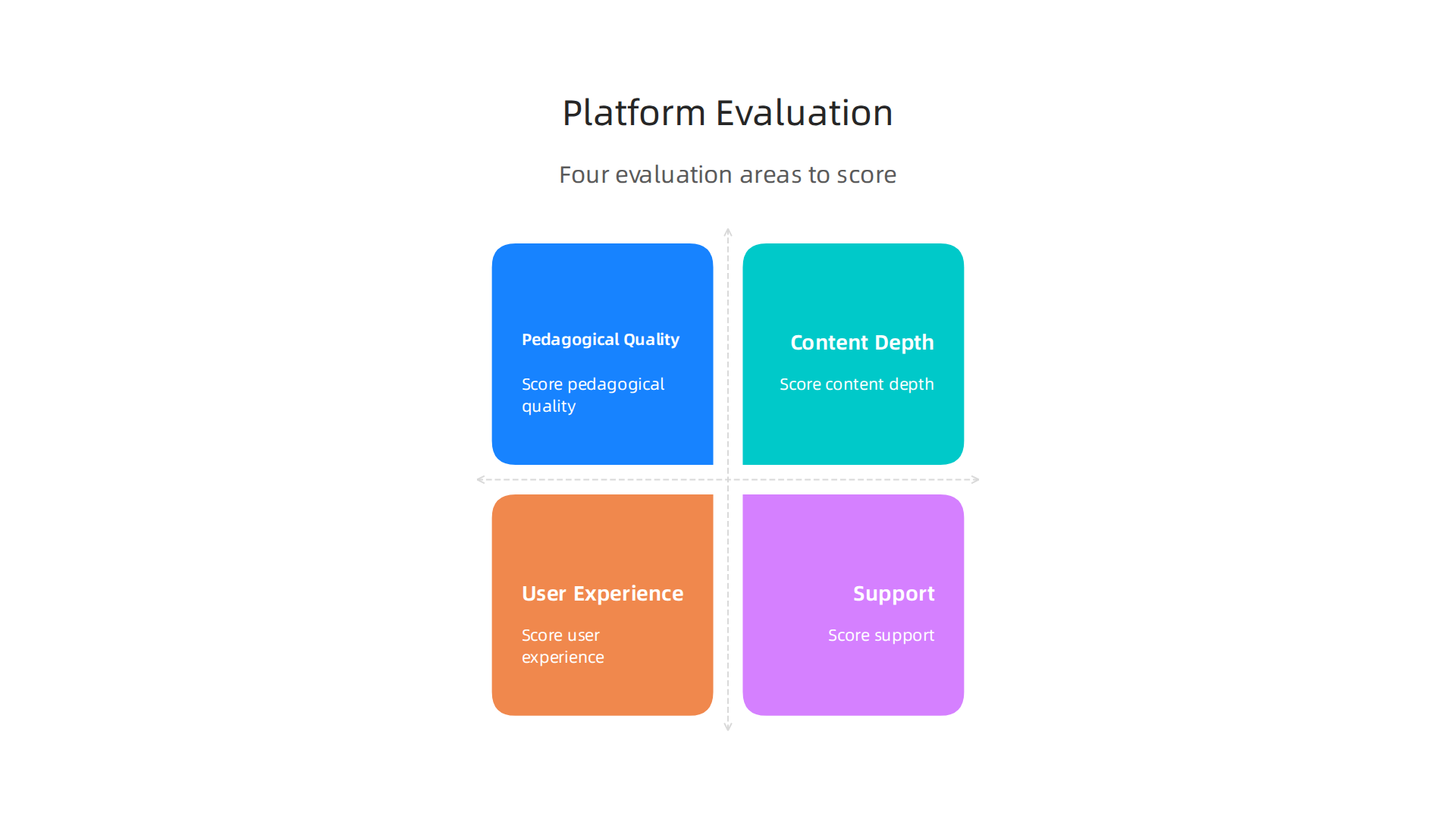
These four buckets cover what matters most for real learning.
- Pedagogical quality means the platform actually teaches you how to think, not just what to think. Does it explain concepts step by step? Does it use examples you can relate to? A high quality digital learning platform will focus on the "why" behind each idea, not just the "what."
- Content depth looks at how much material is available and how far it goes. A good course on logical fallacies is nice, but a great platform covers dozens of fallacies, gives you practice exercises, and shows you how to spot them in real life. Look for online programs that offer a full curriculum, not just a single lesson.
- User experience matters because a clunky interface kills motivation. The platform should be easy to navigate on both desktop and mobile. You should be able to track your progress and jump back into lessons without frustration.
- Support covers both technical help and community feedback. Can you ask questions? Is there a discussion board or a way to chat with instructors? Good support keeps you from getting stuck.
Beyond these four areas, you should compare platforms on interactivity, feedback quality, and assessment rigor. Does the platform ask you to apply what you learn? Do you get detailed feedback on your answers? Are the tests designed to measure real understanding, not just memory? A platform like Thinkific allows creators to build interactive quizzes and assignments, which can boost engagement (see this list of top platforms for 2026 on iSpring for more examples).
To get a balanced view, check both user reviews and expert ratings. Real users on sites like G2 share honest feedback about their experiences. Expert reviews from sources like TechRadar or Schoolmaker give you a professional perspective on features and value. Combining both helps you avoid hype and see the full picture.
Use this framework to narrow down your choices. The platform that scores highest on these criteria is the one worth your time and money. Ready to apply this framework to a platform built for critical thinking? Get Started and see how our structured approach to reasoning, exercises, and feedback can help you think better every day.
Evidence: Do These Platforms Actually Improve Critical Thinking?
You might wonder if learning critical thinking online really works. Can a screen and a keyboard actually teach you to reason better? Research says yes. Multiple peer-reviewed studies show that structured online training leads to real, measurable gains in critical thinking skills.

One study looked at "precision teaching" in an online setting. Researchers found that a focused online intervention significantly improved critical thinking. The results were published in a peer-reviewed journal. (Read the full study here.) Another large analysis compared online, flipped, and in-person critical thinking teaching. It found that online teaching was just as effective as in-person methods for improving these skills. (See the study here.)
Meta-analyses also back this up. One major review of problem-based learning showed that active online methods boosted critical thinking just as much as traditional classroom approaches. (You can read the meta-analysis here.) And a broader evaluation of critical thinking training programs found that longer courses with active exercises produced the best results. (Check that review here.)
The takeaway? Online learning platforms can absolutely improve your critical thinking when they are designed right. The key is to look for digital learning platforms that offer longer programs with active learning components like quizzes, projects, and discussions. Bite-sized videos can help refresh your knowledge, but deep practice is what builds the skill. (One study on bite-sized videos shows their value for reinforcement here.)
So if you are choosing an online program for critical thinking, focus on courses that make you apply what you learn. That is where the real growth happens. Ready to start a program built on this proven approach? Get Started and access practical frameworks, examples, and exercises that sharpen your reasoning every day.
Emerging Trends Shaping Critical Thinking Platforms in 2026
The online learning world is changing fast. As the global e-learning market races toward $389 billion in 2026, digital learning platforms are getting smarter and more engaging. Three big trends are making them better than ever at building critical thinking.
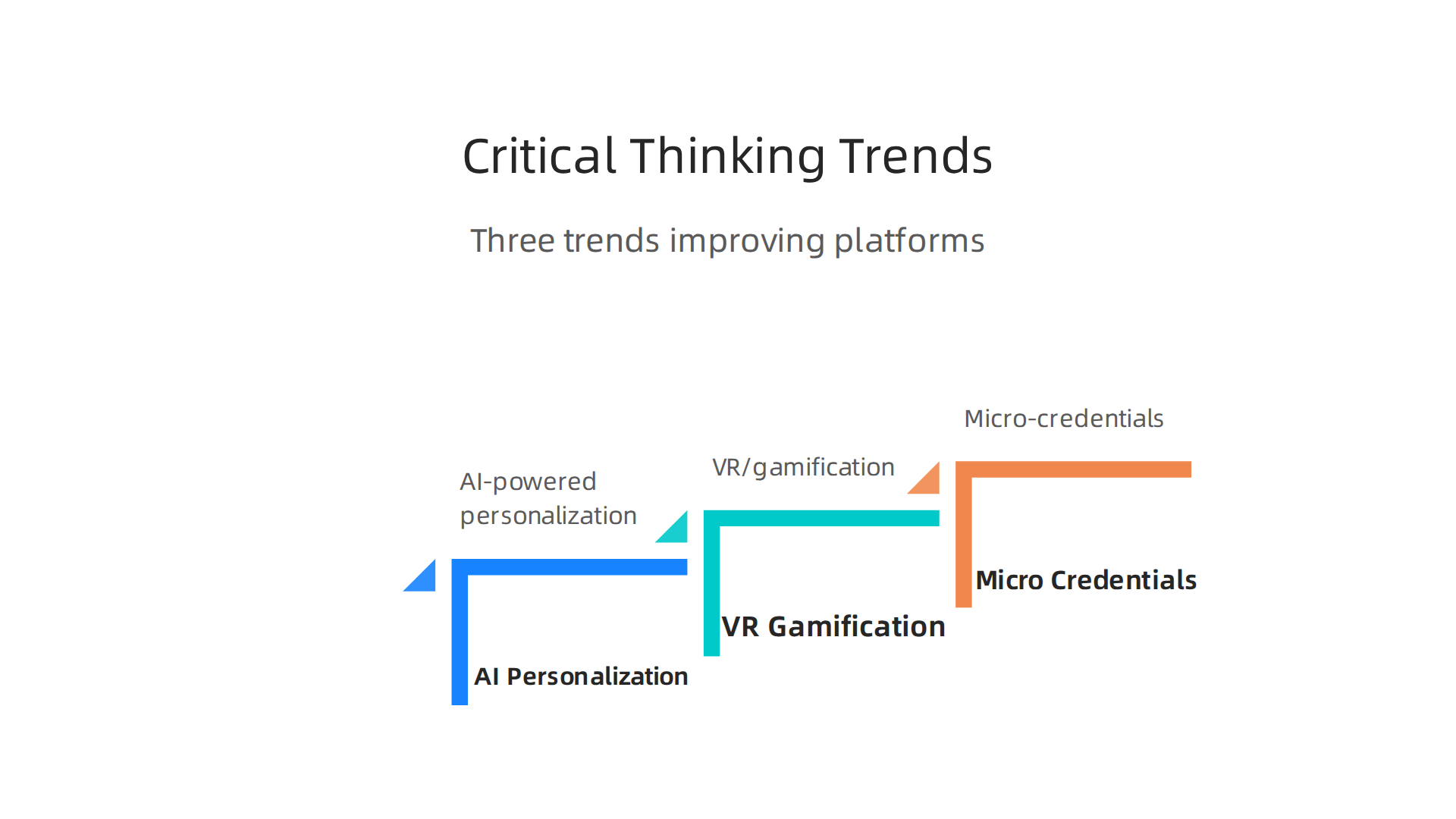
AI-powered personalization is the first trend. Platforms now use artificial intelligence to spot exactly where your thinking is weak. Instead of a one-size-fits-all course, the system reads your answers and shifts the material to challenge your blind spots. One report predicts explosive growth in AI platforms that analyze your strengths and weaknesses. (Check out the full analysis here.) This means you spend less time on what you already know and more time on the gaps that matter.
Virtual reality and gamification are the second trend. You can now step into a VR courtroom, a business negotiation, or a historical debate and practice thinking on your feet. These immersive experiences force you to weigh evidence, question sources, and make decisions under pressure. Virtual reality is entering a more mature phase in 2026, with platforms using it to create realistic critical thinking challenges. (Learn about the platform shifts here.) Gamification adds points, levels, and leaderboards, making the hard work of deep reasoning feel more like play.
Micro-credentials and badges are the third trend. Short, focused courses now offer verified credentials for specific skills like "evaluating arguments" or "spotting logical fallacies." These badges motivate you to complete the work and give you something concrete to show employers or professors. As the online education market grows, eLearning statistics show that nearly 49% of learners value recognized credentials. This trend turns abstract skill-building into real-world proof.
These trends show that digital learning platforms are not just getting bigger. They are getting smarter at helping you think better. But even the best platform works best when you trust your own reasoning. Clear thinking needs self-trust under pressure. To explore this idea further, check out Dean Grey’s research.
Summary
This article explains why critical thinking is increasingly essential in a world flooded with AI-generated content, fast news cycles, and competing information sources, and it guides readers on choosing online learning platforms that actually improve reasoning. It outlines the demand for clear thinkers from employers and educators, then details three core platform features—interactive problem solving, argument analysis, and adaptive learning—that turn theory into practiced skill. You’ll learn how simulations, real-time feedback, and argument mapping build practical competence, why adaptive paths prevent wasted effort, and how to use a simple rubric to compare platforms on pedagogy, content depth, user experience, and support. The piece also summarizes peer-reviewed evidence showing online interventions can measurably boost critical thinking and highlights emerging trends like AI personalization, VR simulations, and micro-credentials. After reading, you’ll know what to look for in a program, how to evaluate options, and which kinds of exercises produce real, retained improvement in reasoning and decision-making.