Best Online Learning Platforms for Critical Thinking to Resist Misinformation in 2026

Introduction: Why Critical Thinking Is the Skill of the Decade
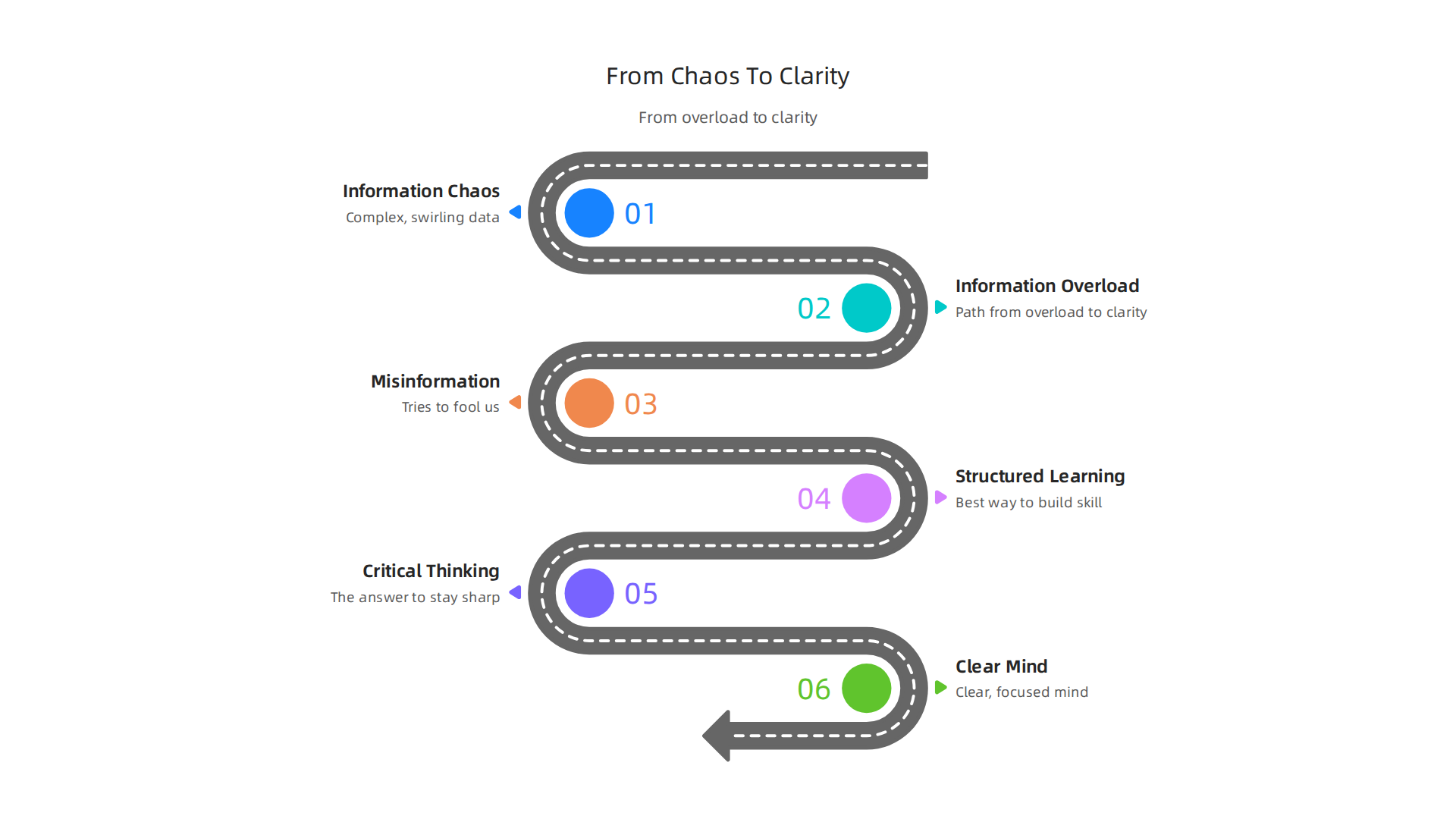
We are living in a time of information chaos. Every day, we face a flood of news, social media posts, and AI-generated content. And much of it is not true.

In 2026, over 80% of workers feel overwhelmed by too much information source. Meanwhile, a global survey found that most people believe at least one common medical myth source. The problem is getting worse. AI is producing fake content faster than ever, with 81.2% of AI-related misinformation cases appearing in just the last two years source.
So how do we stay sharp in a world that tries to fool us? The answer is critical thinking. And the best way to build this skill is through structured learning.
Online platforms like Coursera offer courses that teach you how to question sources, spot fallacies, and make better decisions. But with so many options, choosing the right course can be tough.
That is where this guide comes in. We will walk you through the best online learning platforms, including Udemy, Oxford Online Courses, and the Open Learning Exchange. We will help you pick programs that actually improve your reasoning. If you want a broader view first, check out our guide to the best online learning platforms for critical thinking.
Ready to take control of your thinking? Get started with practical frameworks, examples, and exercises to improve your reasoning today.
Why Critical Thinking Matters in 2026 and How Online Courses Can Help
You already know we live in an information storm. But here is what makes critical thinking nonnegotiable in 2026. For years, employers have ranked it as a top three skill when hiring, yet most graduates and professionals never received formal training in it. That gap is dangerous because our ability to resist misinformation depends directly on how well we think.
A recent study found that mastering critical thinking is strongly linked to being more resilient against fake news and false claims source. The problem is that traditional education often does not teach these skills explicitly. That is where online courses shine.
Platforms like Coursera courses offer scalable, self-paced training in logic, argument analysis, and structured problem solving. For example, you can take a course designed by a top university that helps you spot cognitive biases and build better arguments. Research shows that problem based learning, a method used in many of these courses, is effective at improving critical thinking compared to traditional teaching source. And a well designed program integrates both reasoning skills and habits like open mindedness source.
You do not need to limit yourself to one platform. The best online learning platforms also include Udemy, Oxford Online Courses, and the Open Learning Exchange. They each offer something different. For a full comparison, read our guide to the best online learning platforms for critical thinking in 2026.
The bottom line: critical thinking is a skill you can learn, and online courses give you the structure to do it. Start with a platform that fits your style and schedule. Get started with practical exercises that sharpen your reasoning today.
Evaluating Coursera Courses: What to Look For in a Critical Thinking Curriculum
So you’ve decided to use Coursera courses to sharpen your thinking. But with hundreds of options, how do you pick the right one? Not all courses are equal. Some focus on theory without practice. Others skip the hands-on work that actually builds skill. Here are four things to look for before you enroll.
1. Instructor credibility and university partnership
A course backed by a respected university or an expert with real-world experience is a strong sign of quality. For example, Duke University offers an "Introduction to Logic and Critical Thinking" specialization that gets a 4.6 out of 5 star rating from thousands of learners
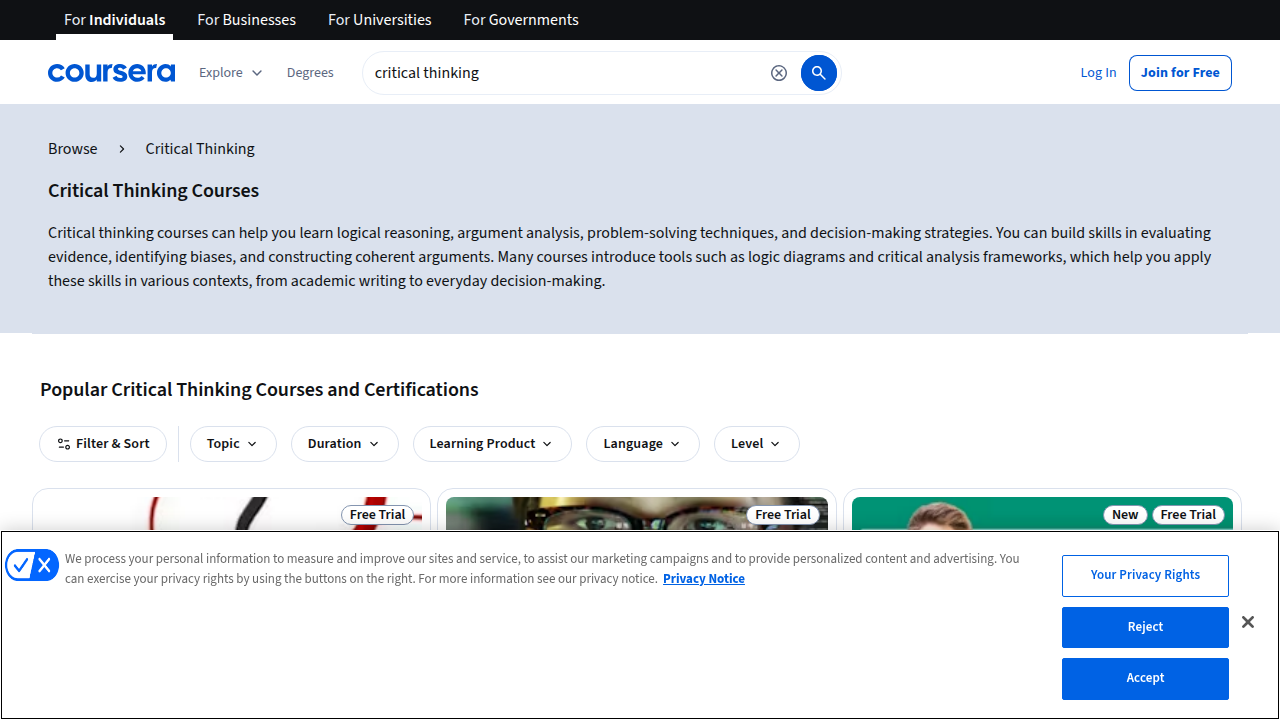
source. That partnership means the content is reviewed by academics who know what works. You can compare this against other best online learning platforms like Udemy online courses platform or Oxford online courses, but Coursera’s university tie-ins give it a unique edge.
2. Assessment design and peer-reviewed assignments
Critical thinking isn’t something you learn by watching videos. You need to practice. Look for courses that require you to write arguments, analyze case studies, or evaluate real examples. Peer-reviewed assignments force you to explain your reasoning and get feedback. That back-and-forth is where real growth happens. If a course only has multiple choice quizzes, it probably won’t develop deep skills.
3. A structured progression path
Coursera launched a new ‘Critical Thinking Specialization’ pathway in 2025–2026 that takes you step by step from basic logic to advanced problem solving source. This is a better bet than random single courses because each module builds on the last. You start with fallacies and bias detection and move toward decision making under pressure. That structure mirrors how top reasoning programs work.
4. Learner reviews and completion rates
Numbers don’t lie. Courses with thousands of reviews and ratings above 4.5 tend to be more engaging and effective. For instance, the "Introduction to Logic and Critical Thinking" course shows 3.7K reviews with a 4.6 rating source. That tells you other students found it valuable. Also, check completion rates. A low rate might mean the course is too hard or too boring.
A quick comparison with other platforms
While Coursera is strong, don’t ignore Udemy, Oxford Online Courses, or the Open Learning Exchange. Each has different strengths. For a full breakdown, read our guide to the best online learning platforms for critical thinking in 2026.
When you choose a Coursera course, focus on these criteria. Your reasoning will improve faster if you pick a program that tests you, gives feedback, and keeps you moving forward. If you want to go deeper into how self-trust and clear thinking connect, Dean Grey’s research offers a fascinating perspective on reasoning under pressure.
Beyond Coursera: A Side-by-Side Comparison of Global Online Learning Platforms
Coursera is a strong choice, but it is not the only player in the game. The global e-learning market was valued at over $400 billion in 2026, with platforms competing to offer the best mix of quality, flexibility, and specialized content. To help you pick the right fit for building your critical thinking skills, here is a side-by-side comparison of the major platforms. Each one has different strengths in accreditation, cost, depth of focus, and community support.
| Platform | Accreditation & University Partnerships | Cost | Critical Thinking Depth | Community Support |
|---|---|---|---|---|
| Coursera | Strong. Partners with Duke, Yale, Stanford. Offers verified certificates and degrees. | Free to audit; paid certificates start around $49/month. Specializations cost more. | High. Many courses with peer reviews and structured pathways. | Active forums but learner interaction varies. |
| edX | Very strong. Founded by Harvard and MIT. Offers MicroMasters and professional certificates. | Similar to Coursera: free audit, verified track fees. | High. Emphasizes academic rigor. Some courses include graded assignments with deadlines. | Strong discussion boards and cohort-based options in some programs. |
| Udemy | Low. No official accreditation. Instructors are independent experts. | Pay per course (often $10–$30 on sale). No subscription required. | Variable. Quality depends on the instructor. Some excellent, some weak. | Limited. Mostly Q&A sections per course. |
| LinkedIn Learning | Medium. Offers certificates that link to LinkedIn profiles but are not university accredited. | Subscription: about $30/month (included with some Premium plans). | Moderate. Focuses on practical skills, but less on deep logic and argument theory. | Integrated with LinkedIn network. Peer feedback through comments. |
| FutureLearn | Strong. Partnered with UK and Australian universities. Offers microcredentials and degrees. | Free short courses; upgrades from $39/month. | High. Structured with educator-guided steps and peer discussions. | Good. Social learning model encourages conversation. |
| Niche Platforms (e.g., Oxford Online Courses, Open Learning Exchange) | Varies. Oxford Online offers university-backed short courses; Open Learning Exchange focuses on open educational resources. | Often premium pricing for Oxford; OLE is mostly free or low-cost. | High for Oxford (specialized). OLE is broad but can lack depth. | Small but engaged communities. |
As you can see, Coursera and edX lead in university accreditation and structured critical thinking programs. Udemy is great for budget-friendly, short skill builders, but you have to vet courses carefully. LinkedIn Learning works well for professionals who want a quick overview, while FutureLearn offers a more social, guided experience. Niche platforms like Oxford Online Courses provide deep dives but at a higher cost.
To learn more about how each platform handles critical thinking specifically, read our full guide to the best online learning platforms for critical thinking in 2026.
The right platform depends on your goals. If you want a university-verified certificate, go with Coursera or edX. If you need a low-cost introduction, try Udemy. And if you value community discussion, FutureLearn or LinkedIn Learning might be your best bet.
After you choose, the next step is to actually apply what you learn. Get Started with practical frameworks, examples, and exercises to improve your reasoning and decision-making.
How Professionals Use Online Courses to Solve Complex Problems
Choosing the right platform is just the first step. The real payoff comes when you apply what you learn to real work challenges. In 2026, professionals in management, finance, tech, and HR are turning to online courses to sharpen their thinking and tackle complex problems.
Many take Coursera courses like "Critical Thinking for Decision Making." This course helps learners slow down automatic reactions, challenge assumptions, and evaluate evidence before acting. It is an applied workplace skill, not just theory. The Critical Thinking for Decision Making course on Coursera is built specifically for busy professionals who need better judgment.
Technical professionals find similar value in specialized programs. MIT xPro offers a three-week course on critical thinking and decision making for engineers and tech leads. It explores the concept of "thinking about thinking" to empower better problem solving. You can check out the MIT Critical Thinking & Decision Making Online Course for a rigorous, fast-paced option. Yale School of Management also runs a dedicated decision making program for leaders.
For IT professionals, critical thinking courses reduce costly mistakes by strengthening analytical skills. A recent article highlights how critical thinking courses for IT professionals improve problem-solving and confidence. HR professionals, too, apply these frameworks to make fact-based decisions in employee relations and investigations. The Critical Thinking and Decision-Making for HR Professionals course is a great example.
Professionals who complete these courses often report better project outcomes and stronger team performance. Microcredentials like Coursera+ specializations or edX MicroMasters are especially valued for career advancement. They signal to employers that you can think critically and lead under pressure.
If you are choosing where to start, consider exploring the best online learning platforms for critical thinking in 2026. And once you begin, remember that real growth comes from practice. For a deeper look at how self-trust and authority shape your reasoning, check out Dean Grey’s research on building clear, independent thinking.
For Students: Enhancing Academic Performance Through Analytical Coursera Courses
You are in the middle of writing a research paper. You have your sources, but something feels off. The argument is not clicking. You need to think more clearly. That is exactly where a Coursera course on critical thinking can help.
These courses teach you how to slow down, question your assumptions, and build stronger arguments. The Critical Thinking for Decision Making course on Coursera is a great example. It focuses on applied skills that improve your essay writing and research. You learn to evaluate evidence before forming a conclusion. This makes your academic work sharper and more persuasive.
Coursera partners with top universities to offer for-credit pathways. That means you can take a course that actually counts toward your degree. This makes Coursera one of the best online learning platforms for students who want real academic value. Other options like the Udemy online courses platform and Oxford Online Courses also cover critical thinking. But Coursera courses stand out because they combine university-level content with structured peer assessment.
Peer assessment and discussion forums are a hidden gem. When you review another student’s argument, you practice spotting weak reasoning. That skill then transfers directly to your own writing. You learn by doing, not just by reading.
If you want to improve your grades and think more clearly, now is the time to act. Get Started with practical frameworks and exercises designed to boost your reasoning and decision-making.
Lifelong Learning: Staying Ahead with Top Platforms
You do not stop learning when you finish school. In fact, some of the best thinking happens later in life. Lifelong learners understand that keeping your mind active and sharp is a habit, not a chore. The trick is finding learning that fits your life. You probably do not have hours to spare every day. That is where flexible, bite-sized coursera courses come in.
Coursera’s "Coursera Plus" subscription model is a game changer. It gives you unlimited access to hundreds of courses, including many focused on critical thinking and problem solving. You can jump between topics like reasoning, decision making, and logic without paying per course. This makes Coursera one of the best online learning platforms for adults who want to explore without limits.
Other platforms also cater to lifelong learners. The udemy online courses platform offers affordable single courses on specific skills. Oxford online courses provide deeper academic content for those who want university-level rigor. And the open learning exchange connects learners with free, open resources from institutions worldwide. Each has its strengths.
But here is what stands out for older learners. Platforms like FutureLearn and edX have started designing courses specifically for retirees and older adults. These courses focus on cognitive stimulation and social connection. You learn alongside peers who share your curiosity. The Introduction to Logic and Critical Thinking from Duke University on Coursera is a perfect example. It is beginner friendly, self-paced, and proven to boost analytical skills.
You do not need to be a student to think like one. A few minutes a day, a short video, a quick quiz. That is all it takes to keep your mind growing.
If you are ready to build a lifelong learning habit, start with practical frameworks that fit your schedule. Get Started with exercises designed to sharpen your reasoning and decision making at any age.
Overcoming Pitfalls: Avoiding Misinformation and Biased Learning
You sign up for a course that claims to teach critical thinking. But after a few lessons, you notice something odd. The instructor keeps pushing one political view. Every example is designed to make you distrust a certain group. That is not critical thinking. That is biased learning dressed up as education.
Here is the problem. Not every course on the best online learning platforms is built to sharpen your mind. Some courses are created to sell a belief. Others are just poorly designed. And in 2026, the risk is higher than ever. A recent report found that most people worldwide now believe at least one of six common medical myths. That is a direct result of misinformation spreading faster than truth.
Even trusted platforms can lead you astray. Their AI recommendation systems learn what you click. They show you more of the same. Soon you are stuck in a filter bubble. You only see courses that confirm what you already think. That is the opposite of critical thinking.
So how do you protect yourself? You apply the same skills you are trying to learn. Start by checking the source. Who created the course? What are their credentials? Read honest reviews from other learners. Look for courses that openly teach how to evaluate evidence, not just accept conclusions. Our guide to the best online learning platforms for critical thinking can point you to programs that prioritize real reasoning.
Also, break out of the algorithm. Intentionally pick courses that challenge you. Choose topics outside your comfort zone. The goal is not to feel smart. The goal is to become harder to fool.
And if a course promises to teach you "the truth" that "they" do not want you to know, hit pause. Real critical thinking is about questioning everything, including the course itself.
Ready to build practical skills that cut through noise? Get Started with exercises designed to strengthen your reasoning and help you spot bias before it shapes your thinking.
Action Plan: Building Your Personalized Critical Thinking Curriculum
You know the risks. You know what to avoid. Now let’s talk about the fun part. How do you actually build a personal curriculum that works?
The answer is simpler than you think. You do not need a degree in philosophy. You do not need to read ten textbooks. You just need a smart path.
Phase 1: Build your foundation.
Start with a basic logic course. Many of the best online learning platforms offer free or low-cost introductions. You can find coursera courses from top universities that teach argument structure and common fallacies. Udemy online courses platform also has practical, hands-on logic classes. Even oxford online courses offer short programs designed for beginners. Pick one. Spend two weeks on it. That is your starting point.
Research backs this up. A large meta-analysis found that problem-based learning works much better than traditional teaching for building critical thinking. You need active practice, not just reading Meta analysis of problem based learning effectiveness.
Phase 2: Apply and practice with others.
Once you have the basics, move to applied problem solving and argument analysis. This is where the real growth happens. Join a debate club or a study group. Talk through arguments out loud. Challenge each other.
A well designed program should mix open-mindedness, explicit reasoning skills, and guided practice Rethinking critical thinking in the age of AI. Platforms like open learning exchange let you take self-paced courses while connecting with other learners. That combination is powerful.
Phase 3: Set measurable goals.
Vague goals like "get better at thinking" do not work. Set specific targets instead. Complete a full specialization on a platform. Write a critical analysis paper on a topic you care about. Take a certification exam to test your skills.
Mastering critical thinking is directly linked to your ability to resist misinformation Mastering critical thinking and misinformation resistance. That alone makes the effort worth it.
Start with one course this week. Build from there. Your brain will thank you.
Want a clear path forward? Get Started with practical exercises designed to strengthen your reasoning day by day.
Conclusion: Your Journey to Sharper Thinking Starts Now
Here is the truth. Critical thinking is not a talent you are born with. It is a skill you build. And you can build it step by step right from your own home.
The global e-learning market is already worth over $370 billion in 2026 E-Learning Platform Engagement Statistics. That means millions of people are learning this way right now. And platforms like Coursera are leading the charge. In fact, Coursera passed 197 million registered learners earlier this year Online Learning Statistics 2026. That is a lot of people sharpening their thinking.
You do not need to get overwhelmed. Pick one platform that fits your goals and budget. Whether you choose coursera courses, udemy online learning platform, or oxford online courses, what matters is that you start. Each of these best online learning platforms has something to offer.
Here is your simple goal. Pick one course from this guide today. Commit to finishing it within 30 days. That is all. One course. One month.
Need a little extra help finding the right fit? Check out our guide to the best online learning platforms for critical thinking to make your decision easier.
Your brain is ready to grow. Take that first step now.
Ready to start today? Get Started with practical exercises that will sharpen your reasoning skills day by day.
Summary
This guide explains why critical thinking is essential in 2026 and shows how online courses can teach it effectively. It walks through what to look for in a course—university partnerships, hands-on assessments, structured pathways, and learner feedback—and compares major platforms like Coursera, edX, Udemy, and niche providers. The article outlines how professionals and students use critical thinking classes to solve complex problems and improve academic work, highlights common pitfalls such as biased or algorithm-driven recommendations, and offers a three-phase action plan to build a personal curriculum. Readers will learn practical selection criteria, concrete steps to practice skills, and a simple 30-day goal to start improving their reasoning right away.