
Why this guide matters for future quants, managers, and lifelong learners
In 2026, the way we learn and grow in our careers has changed a lot. More and more people are choosing to go to school online, even for advanced degrees. This is especially true for subjects like financial engineering, which mixes money smarts with computer skills. Getting a masters in financial engineering online is now a popular choice for many.
This guide is for anyone thinking about this exciting path. Maybe you want to become a "quant," someone who uses math and computers to solve big problems in finance. Maybe you are already a professional manager wanting to learn new skills. Or perhaps you are just a lifelong learner eager to understand how technology is changing the money world. An online master’s program can help you reach these goals from almost anywhere.

For example, some programs like the Financial Engineering program at Stevens Institute of Technology are highly ranked, showing their quality in the field for 2026, as noted in the 2026 QuantNet Ranking of Best Financial Engineering Programs.
Choosing to study for a masters in financial engineering online comes with good points and some things to think about. You get a lot of freedom to study when it works best for you, and these programs often focus on the latest technology. But you might miss out on face-to-face time in labs or easy networking with classmates in person. Don’t worry, we’ll help you look at all these things carefully.
This guide will teach you how to pick the best online program for you. We will talk about what courses to look for, what schools expect from students, if the degree is worth the money, and why accreditation is important. We’ll also explore the different jobs you can get after earning your online universities for working adults in financial engineering. By the end, you’ll have a clear idea of how to make a smart choice for your future.
Why choose an online master’s in Financial Engineering?
Choosing to pursue a masters in financial engineering online can be a smart move for many people in 2026. This type of program is great for those who want to change careers without stopping their current job. It’s also perfect for professionals who work remotely or need a study plan that bends to their busy lives. You can set your own pace, which is a big help if you have family duties or travel a lot.
These online programs teach you strong skills in math and computers, which are very important in today’s money world. You learn about how data helps make financial choices, and you get good at programming. For example, the Master of Science in Financial Engineering program at USC is made for students with backgrounds in math or engineering, focusing on these key skills. You’ll learn how to use advanced tools to understand markets and manage risks.
While there are many good things about online study, it’s also helpful to think about what you might miss. Sometimes, it can be harder to meet new people and build a network of friends and colleagues when you’re not in a classroom. You might also not have easy access to trading labs where you can practice with real financial tools. Hands-on internships can sometimes be simpler to find when you are connected to a physical campus. However, many online programs are working hard to make up for these things. Some even offer virtual ways to connect with others or help you find internships.
Overall, an online master’s in Financial Engineering gives you a great way to grow your skills and career. Just like people look for the best online options for an international business degree online or even an online law school, the flexibility of online learning is a huge plus. It helps you get a top-tier education without having to put your whole life on hold. You can look into programs like the tuition-free option at WQU to see how they make advanced learning reachable for more people.
Core curriculum and specializations to look for
When you choose a masters in financial engineering online, it’s really important to know what you’ll be learning. The best programs teach you strong skills that employers want in today’s fast-moving money world. These skills come from a core set of topics and also from special areas you can choose to focus on.
Key Learning Areas
Most online financial engineering programs build on four main pillars of knowledge.
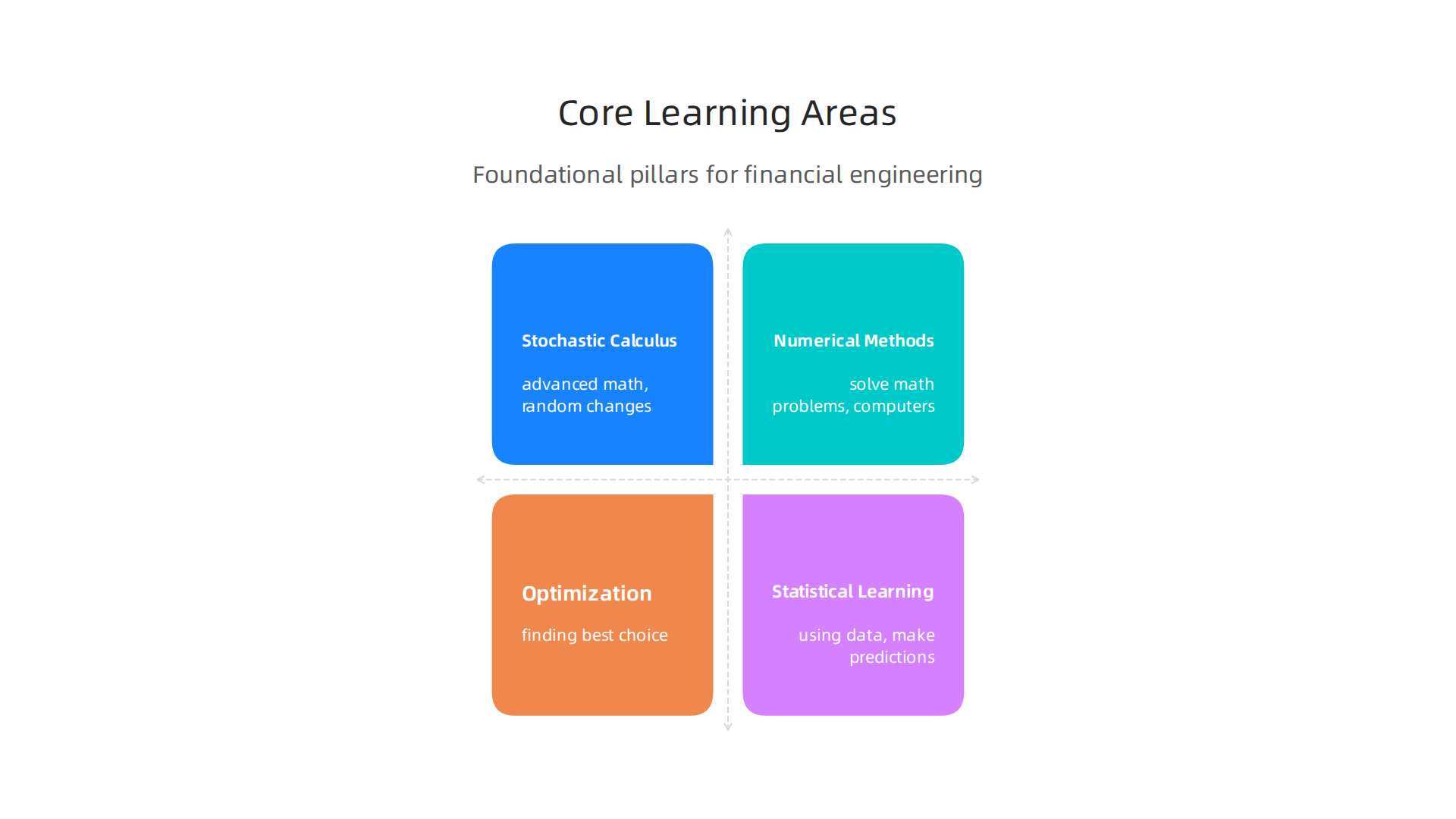
These are the basic ideas that help you understand complex financial problems:
- Stochastic Calculus: This is like advanced math that helps you understand things that change over time in a random way, like stock prices.
- Numerical Methods: These are ways to solve math problems using computers when normal math doesn’t work easily.
- Optimization: This means finding the best possible choice or solution when you have many options and rules.
- Statistical Learning: This is about using data to find patterns and make predictions, which is super useful in finance.
Beyond these core ideas, you’ll also learn very important computer and data skills. You’ll work with programming languages like Python and R. These are tools that help you build models and analyze huge amounts of financial data. You will learn about Monte Carlo simulations, which help predict different outcomes. You’ll also explore machine learning pipelines, which are like step-by-step guides for making computers learn from data, and how to get these models ready for real-world use. When dealing with data and artificial intelligence in finance, understanding the methods behind capturing and using data is key. You might find it helpful to look into CRISP-DM and Skylab USA, which talks about data methods.
Many online programs, such as the Master of Science in Financial Engineering online program from USC Viterbi, focus heavily on these technical skills. If you’re looking to boost your computer skills, you might also find it helpful to explore Free Online Computer Courses for Beginners to Build Career Ready Digital Skills to get a head start.
Specializations That Matter
After you learn the basics, many programs let you choose a special area.
These choices can help you stand out to employers. Some popular and important specializations include:
- Risk Engineering: This is about understanding, measuring, and managing the different kinds of risks in financial markets.
- Algorithmic Trading: Here, you learn how to create computer programs that automatically buy and sell stocks and other financial products very quickly.
- Data Science for Finance: This specialization teaches you how to use advanced data analysis and machine learning to find hidden insights in financial data.
When picking your program, it’s a good idea to check out rankings like the 2026 QuantNet Ranking of Best Financial Engineering Programs to see which schools offer strong programs in these areas. Thinking carefully about what you want to learn and what job you hope to get will help you How to Choose the Right Online Masters Program in 2026 that is best for you.
Quantitative methods and programming (what to expect)
When you choose a masters in financial engineering online, it’s important to understand the deep dive you’ll take into math and computer programming. While we talked about core topics before, these programs demand a very strong and rigorous understanding of quantitative methods. This means you won’t just learn about stochastic calculus or numerical methods; you’ll learn to use them to solve tough, real-world money problems.

Expect to work hard on these math skills, as they are the backbone of financial engineering. Schools often have clear guides on what students need to know to succeed in these demanding online programs, which helps with student retention, as noted in a study on Recommendations to Increase Online Student Retention: A Delphi Study.
Beyond the math, your programming skills will need to be sharp. You’ll build on your knowledge of languages like Python and R. But it’s more than just writing code; you’ll learn to make sure your code is "reproducible." This means someone else can run your code and get the same results, which is key for checking your work and working in teams. You’ll also learn about "version control," which is like tracking changes to your code so you can go back to older versions if needed, especially when collaborating. Finally, you’ll get into the basics of "model deployment." This is about taking the financial models you build and getting them ready to be used in a real company setting. These practical skills are just as important as the math, and foundational computer skills like those taught in Excel Courses Online That Deliver Real Career Results in 2026 can often give you a helpful head start.
Risk management, derivatives, and applied projects
Beyond just crunching numbers and writing code, a good masters in financial engineering online will teach you how to use these tools in real financial situations. When you choose such a program, you’ll learn key ideas like risk management. This means understanding how to measure and control financial risks, which is very important in the money world. You’ll study how to price complex financial products called derivatives, like options and futures. These are tools used to manage risk or make specific bets in the market. Learning about hedging, which is how you protect investments from price changes, and different risk measures is a big part of this.
The best programs will make sure you get hands-on experience. Look for ones that include applied capstones or project-based assignments. These projects let you use what you’ve learned on real market data, preparing you for jobs. This kind of practical learning is a key part of how online education helps students learn today, as noted in a piece on A New Pedagogy Is Emerging… and Online Learning Is a Key Contributing Factor. Being able to access and work with actual market information is a strong sign of a quality program. These hands-on projects often involve working with large amounts of data. This teaches you how to organize and use information in a structured way. For students working on advanced data projects in these programs, understanding data methodology is key. You might find resources like the peer white paper CRISP-DM and Skylab USA, documenting the data methodology behind permission-based capture, helpful for learning about structured data approaches.
Admissions, prerequisites, and transfer credits
When you decide to pursue a masters in financial engineering online, it’s good to know what schools expect from you. Most programs look for students who have a strong background in math.
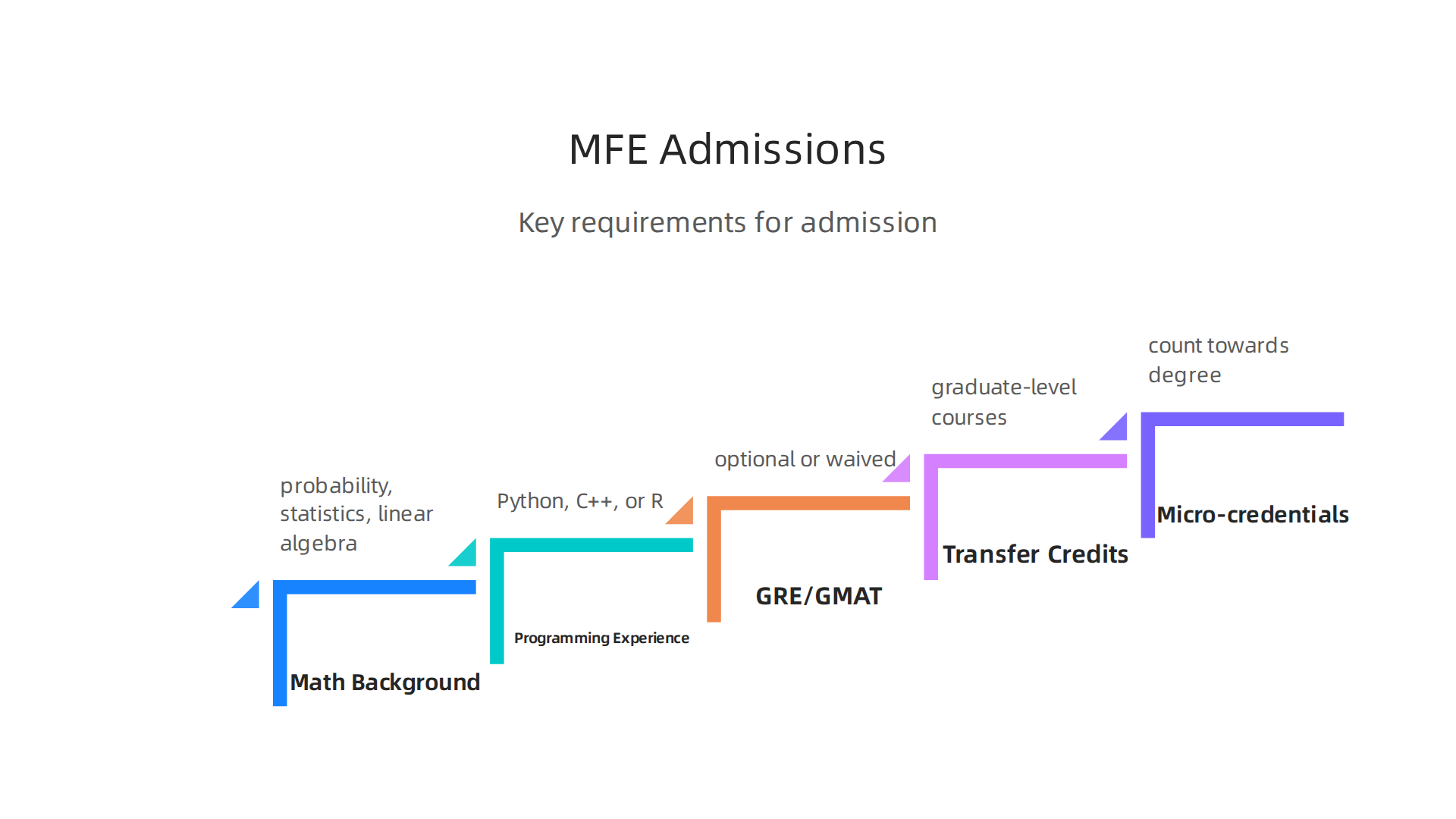
This usually means you should be comfortable with subjects like probability, statistics, and linear algebra. Many also want you to have experience with computer programming, often in languages such as Python, C++, or R. These skills are very important for working with financial data. For example, the admissions requirements for the UCLA Anderson Master of Financial Engineering program highlight the need for strong computational programming skills and a quantitative academic background.
Tests like the GRE or GMAT used to be a must-have for graduate school. However, things are changing, especially for online programs and those with work experience. Many programs are now making these tests optional or waiving them completely. For instance, the Baruch MFE Program no longer requires the GRE or GMAT for admission, opting instead for a different quantitative assessment. Application Process – Baruch MFE Program This trend makes it easier for skilled professionals to apply without needing to retake standardized tests.
Another useful thing to understand is how transfer credits and micro-credentials can play a role. If you have already completed graduate-level courses that are similar to those in a masters in financial engineering online program, you might be able to transfer some of those credits. This can save you time and money. Also, shorter learning programs, known as micro-credentials or certificates, can sometimes count towards your master’s degree or help you meet admissions requirements. This way of building up your education from smaller parts to a full degree is becoming more common in 2026, offering flexible paths to higher education. To explore options for professional growth, you might want to look into Find the Best Career Focused Certificates.
Career Outcomes, Certifications, and Industry Hiring Trends
After learning about how to get into a masters in financial engineering online program, you’ll naturally wonder what kind of job you can get afterwards. People who earn this degree often find exciting roles in the financial world. You could become a quant analyst, which means you use math and computer skills to help make trading decisions. Other common jobs include risk engineer, where you help companies understand and manage financial risks, or an algorithmic trader, using special computer programs to buy and sell stocks very quickly. Many graduates also become data scientists in finance, using large amounts of information to find trends and make predictions.

These roles are all about using advanced math and programming to solve complex problems in money and markets. The career outcomes for an MS in Financial Engineering show graduates can land jobs at top banks and investment firms, as seen in reports from institutions like Lehigh Business MS in Financial Engineering Career Outcomes.
To stand out even more, some people choose to get extra certifications. These are like special badges that show you have more skills. For example, the Financial Risk Manager (FRM) certification is great for risk management jobs. Parts of the Chartered Financial Analyst (CFA) certification can also be very helpful, especially if you want to work more directly with investments. These extra certifications can show future employers that you are serious about your career and have a deep understanding of specific areas.
When you’re choosing a masters in financial engineering online program, it’s smart to look at its track record. See if the school shares its job placement rates, which tell you how many graduates get jobs soon after finishing their studies. Also, check the list of companies that hire their graduates. This can give you a good idea of where you might work. Look for programs that have partnerships with employers or offer strong support for internships, especially for online learners. Internships are a great way to get real-world experience and make connections. While the overall job market for new college graduates in 2026 is described as cautious Job Outlook 2026 – NACE, specialized degrees like a master’s in financial engineering continue to be valuable in niche areas of finance. Thinking critically about these factors can help you pick the right online program for your career goals, much like you would when trying to decide How to Choose the Right Online Masters Program in 2026.
After looking at what kind of job you can get with a masters in financial engineering online, the next big question is often about the money side of things. It’s smart to think about all the costs, how you might pay for your degree, and what you’ll get back in the long run.
Understanding All the Costs
When you plan for a masters in financial engineering online, remember it’s more than just the tuition fee. You’ll have other costs that add up. These include:
- Tuition: This is the main fee for your classes. It can change based on if you live in the state of the school or outside of it, even for online programs.
- Materials: You might need to buy textbooks, special software, or other learning tools.
- Proctoring Fees: Some online tests need you to be watched by a special service, which can cost extra money.
- Data Access Fees: For a financial engineering program, you might need to pay for access to financial data or powerful computer systems.
- Opportunity Cost: This is a big one. It’s the money you could have earned if you weren’t spending time studying. If you cut back on work hours, that’s an opportunity cost. Schools often outline their expected costs clearly, helping students plan, as shown in the 2025-2026 WUST School Catalog for their programs.
Finding Financial Aid and Scholarships
Don’t let the costs scare you away! There are many ways to get help paying for your masters in financial engineering online program.
- Scholarships: These are gifts of money you don’t have to pay back. Many schools, private groups, and even government programs offer scholarships, especially for graduate students. For instance, some programs specifically offer scholarships for students completing graduate degrees in important fields. Look for scholarships for students studying finance, engineering, or even for those from certain backgrounds.
- Employer Sponsorship: Some companies will pay for part or all of your degree if it helps you do your job better. It’s always a good idea to ask your workplace if they offer this kind of support.
- Loan Programs: If you need more help, there are federal and private student loans available. These need to be paid back, usually with interest, but they can cover a large part of your costs. Always understand the terms before you borrow.
Calculating Your Return on Investment (ROI)
ROI means "Return on Investment." It’s about figuring out if the money and time you put into your online degree will be worth it in the end.
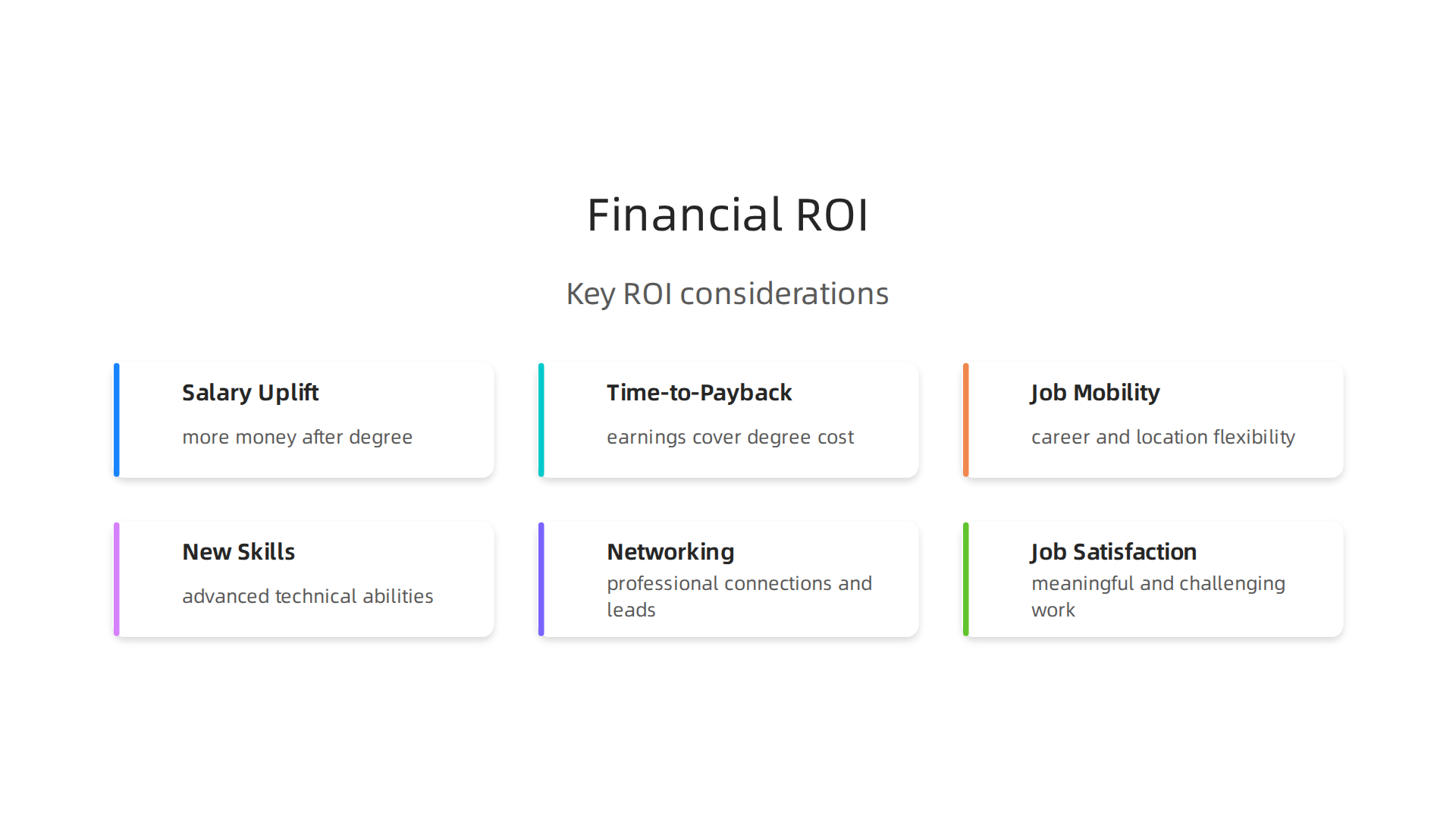
- Salary Uplift: This is how much more money you expect to earn after getting your master’s degree. A masters in financial engineering online can lead to higher-paying jobs, making this a key part of your ROI.
- Time-to-Payback: This is how long it takes for your increased earnings to cover the total cost of your degree. You want this time to be as short as possible. For example, some programs specifically address how they help students with financial planning and Return on Investment (ROI) analysis.
- Non-Monetary Benefits: Not everything is about money. Getting a masters in financial engineering online can also give you:
- Better Job Mobility: You might be able to move to different cities or even countries for work.
- New Skills: You’ll learn advanced skills that make you more valuable in many roles.
- Networking: You’ll meet important people in your field who can help your career.
- Job Satisfaction: Doing work you enjoy and find challenging is a huge benefit.
By carefully considering these factors, you can make a smart choice about pursuing an online program. Thinking about how you will pay for it and what you will gain from it is a crucial part of the decision-making process for any online education. If you’re a working adult, finding the right program means balancing these factors, which is often discussed in guides like Online Universities for Working Adults: How to Pick the Right Program and Thrive.
After thinking about the costs and what you might earn back, it’s also super important to look closely at the quality of a masters in financial engineering online program. This means checking who says the program is good, who teaches the classes, and what kind of work they do.
What Accreditation Means and Why It Matters
Accreditation is like a stamp of approval from an official group. It tells you that a school or program meets certain standards for how it teaches and what it offers. For a masters in financial engineering online, this stamp is very important. It shows that the education you get is real and valuable. Without it, your degree might not be recognized by employers or other schools.
Always make sure the online program you choose is accredited by a group recognized by the Council for Higher Education Accreditation (CHEA) or the U.S. Department of Education.
This is a key step when looking for Accredited Online Financial Engineering Programs. It helps you pick a good school and avoid programs that aren’t well-regarded.
Who Teaches and What They Know
The people who teach your classes, called faculty, are a big part of how good your learning experience will be. When you look at a masters in financial engineering online program, check out the teachers.
- Their Background: Do they have advanced degrees in financial engineering or related fields? Do they have real-world experience in finance?
- Their Research: Are they doing new and important research in the field? This shows they are up to date and can teach you the latest ideas. Some programs, like a Master’s In Financial Engineering: Online Degree Guide, highlight their expert faculty.
- Industry Ties: Do they work with companies in the finance world? This can mean they bring practical knowledge into the classroom and might even help you find job connections. You can often learn more about the faculty and their insights into a program by watching videos, such as one discussing a Master in Financial Engineering program.
Good teachers make a big difference in how much you learn and how ready you are for your career.
Other Ways to Check a Program’s Quality
Besides accreditation and faculty, other things can tell you if a masters in financial engineering online program is top-notch.
- Rankings: Many groups rank online programs. These rankings can give you an idea of where a program stands compared to others. For example, you can check lists like the 2026 Best Master’s of Financial Engineering Programs. But remember, rankings are just one piece of the puzzle. It’s smart to look at how they came up with the ranks and what they focused on. Another well-known ranking is the 2026 QuantNet Ranking of Best Financial Engineering Programs.
- Employer Connections: Does the school have good relationships with companies that hire financial engineers? This can be a sign that employers trust the program’s graduates.
- Alumni Network: What are past students doing now? A strong network of successful alumni can open doors for you and show the value of the degree.
Taking time to look at these details will help you choose the best online program for your future. Thinking critically about how to choose an online program is a valuable skill itself, and you can learn more about how to do that by reading our guide on how to choose the right online masters program in 2026.
Summary
This guide explains how to choose a masters in financial engineering online in 2026, covering why the format suits career changers, remote professionals, and lifelong learners. It walks through core curriculum—stochastic calculus, numerical methods, optimization, and statistical learning—plus critical programming and data skills like Python, reproducible code, and model deployment. You’ll learn which specializations matter (risk engineering, algorithmic trading, data science), what hands-on projects and capstones to look for, and how admissions, prerequisites, and transfer credits work. The article also breaks down costs, funding options, ROI, and real career outcomes such as quant roles, risk engineer, and data scientist, while explaining accreditation and faculty quality checks. Practical advice helps you prepare with certificates or preparatory courses, evaluate program rankings and employer ties, and avoid common application mistakes so you make a confident, career-focused choice.