
Online Universities for Working Adults How to Pick the Right Program and Thrive

Introduction: Why This Guide Matters
You have a full time job, a family, bills to pay, and maybe even a commute that eats up hours of your day. But you also have a voice in your head that keeps saying, "I should go back to school." You are not alone.
Over 40% of working adults consider returning to college at some point. But most of them get stuck.

They feel overwhelmed by the sheer number of choices. They worry about diploma mills. They wonder if they can actually balance coursework with an already packed schedule.
Here is the thing. Online education has changed a lot in the last few years. It is not the same as it was a decade ago. Accredited self-paced online colleges now offer degrees that employers actually respect. In fact, fully online enrollment jumped 10% between fall 2022 and fall 2024, which is more than 400,000 new students according to Encoura. And by 2026, that number keeps climbing.
The hard part is separating the real from the fake. Not every virtual university delivers a quality education. Not every streaming university gives you the flexibility you need as a busy professional. That is where this guide comes in.
This guide gives you a step by step framework. You will learn how to evaluate online universities for working adults, spot the programs that actually fit your life, and avoid the ones that waste your time and money. We will cover everything from accreditation to affordability to how you can stay motivated when life gets crazy.
If you want to explore how online programs can prepare you for college and career success, check out our guide on online school programs that prepare you for college and career success.
The goal is simple. Help you find a program that works for you, not the other way around. Let us get started.
Why Online Universities Are the Smartest Choice for Working Adults in 2026
If you are still wondering whether online education is worth your time and money, let me share what the data shows. Online universities for working adults are not a compromise. They are a strategic move. In 2026, these programs offer flexibility that fits your real life, cost less than you think, and earn real respect from employers.
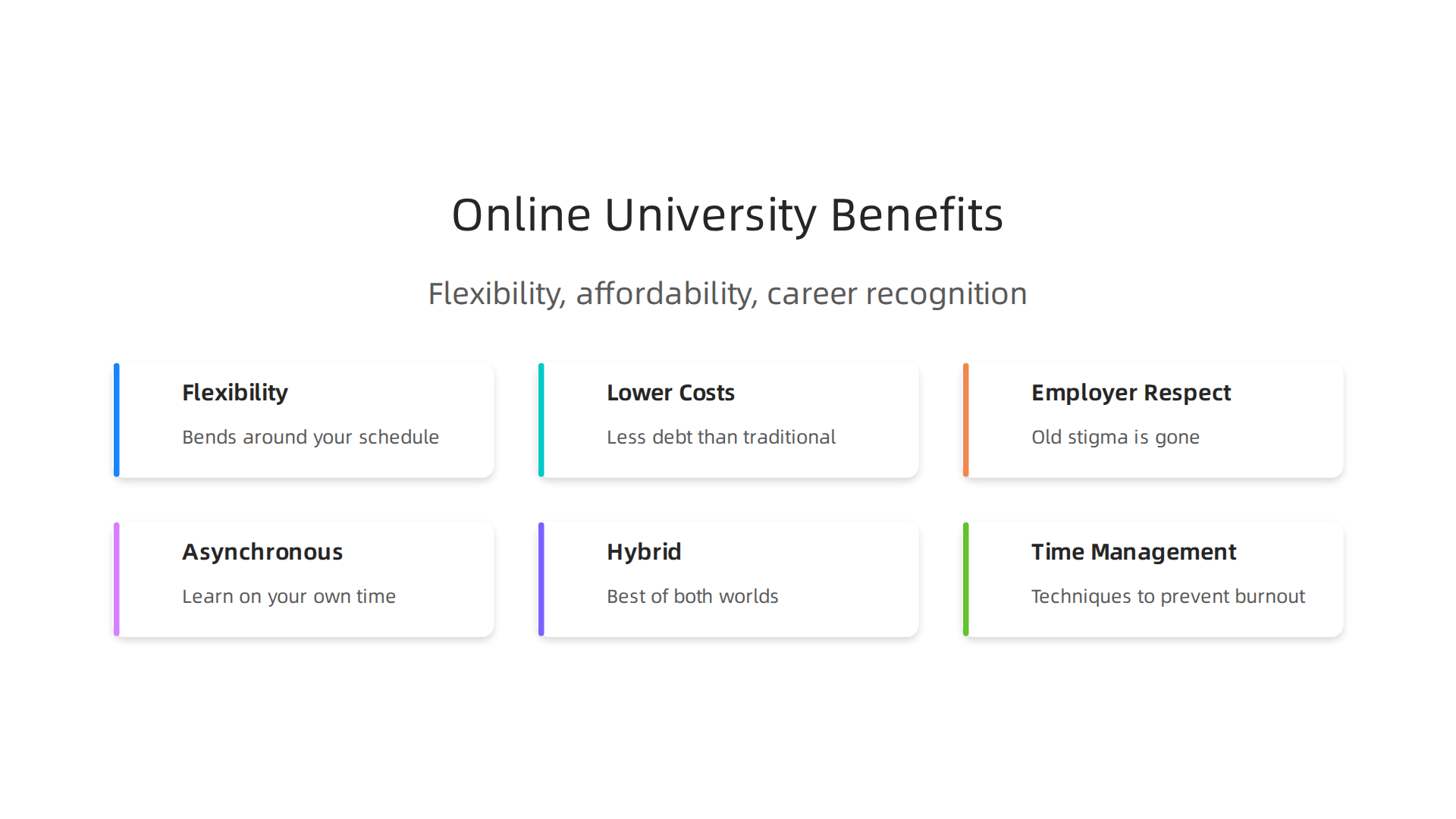
Flexibility that bends around your schedule
You do not have to quit your job to go back to school. That is the biggest win. Many online universities for working adults let you learn through asynchronous classes, which means you watch lectures and complete assignments on your own time. Some programs also mix in live sessions so you can interact with professors and classmates. You choose the pace that works for you.
This is not a niche option anymore. Fully online enrollment jumped 10% between fall 2022 and fall 2024, adding over 400,000 new students (Encoura). People are voting with their time and energy. A self paced online college lets you finish coursework when the kids are asleep or during your lunch break. No commute. No rigid class times. It is learning that molds to your life, not the other way around.

Lower costs and less debt
Traditional degrees can crush your finances. Online programs are often a fraction of the price. According to the National Center for Education Statistics, totally online programs cost an average of $7,996.90 per year, while non-fully online colleges charge more (Affordable Colleges Online). And you save even more when you skip gas, parking, meals out, and childcare.
Many employers also offer tuition assistance for accredited degrees. That means you might pay very little out of pocket. A virtual university that is regionally accredited can help you level up without taking on mountains of student debt.
Employers take online degrees seriously
The old stigma is gone. Employers in 2026 care about skills and accreditation, not whether you sat in a physical classroom. A degree from an accredited online university shows you can manage your time, work independently, and stay disciplined. Those are exactly the traits companies look for in leaders.
If you want to see what options actually hold weight with employers, check out our guide on how to choose an online university for working adults that delivers results. It walks you through the red flags to avoid and the signs of a quality program.
The bottom line is simple. Online universities for working adults are a smart, proven path to advance your career without putting your life on hold. And the sooner you start researching your options, the sooner you can take that next step.
How to Verify an Online University’s Credibility and Accreditation
Going back to school online is a big decision. You want to make sure the time and money you invest actually pay off.

So how do you know if an online university is legit or just a fancy website selling fake degrees?
The answer is accreditation. This is your number one tool for checking credibility. Let me walk you through exactly how to verify a school before you apply.
Start with the official databases
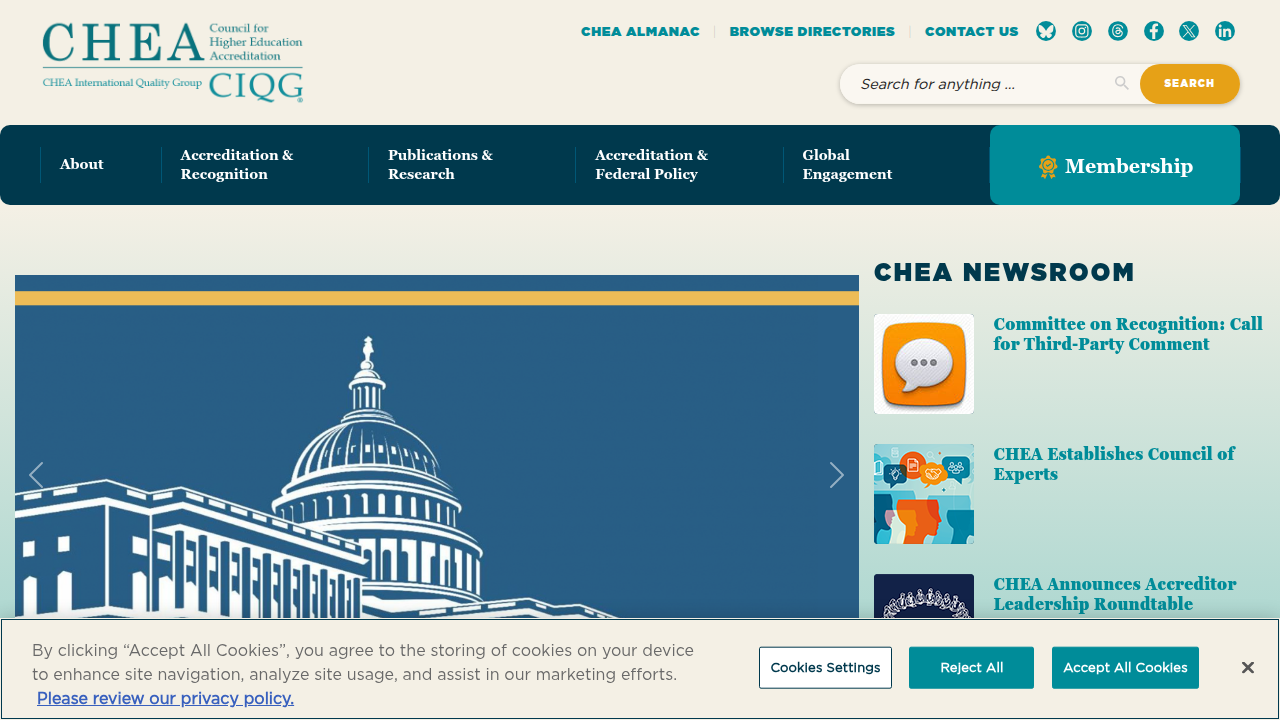
Accreditation means a school has passed a quality review by an outside group. Only trust schools accredited by agencies recognized by the U.S. Department of Education or the Council for Higher Education Accreditation (CHEA).
You can check the complete list of recognized accrediting agencies on the Department of Education website.
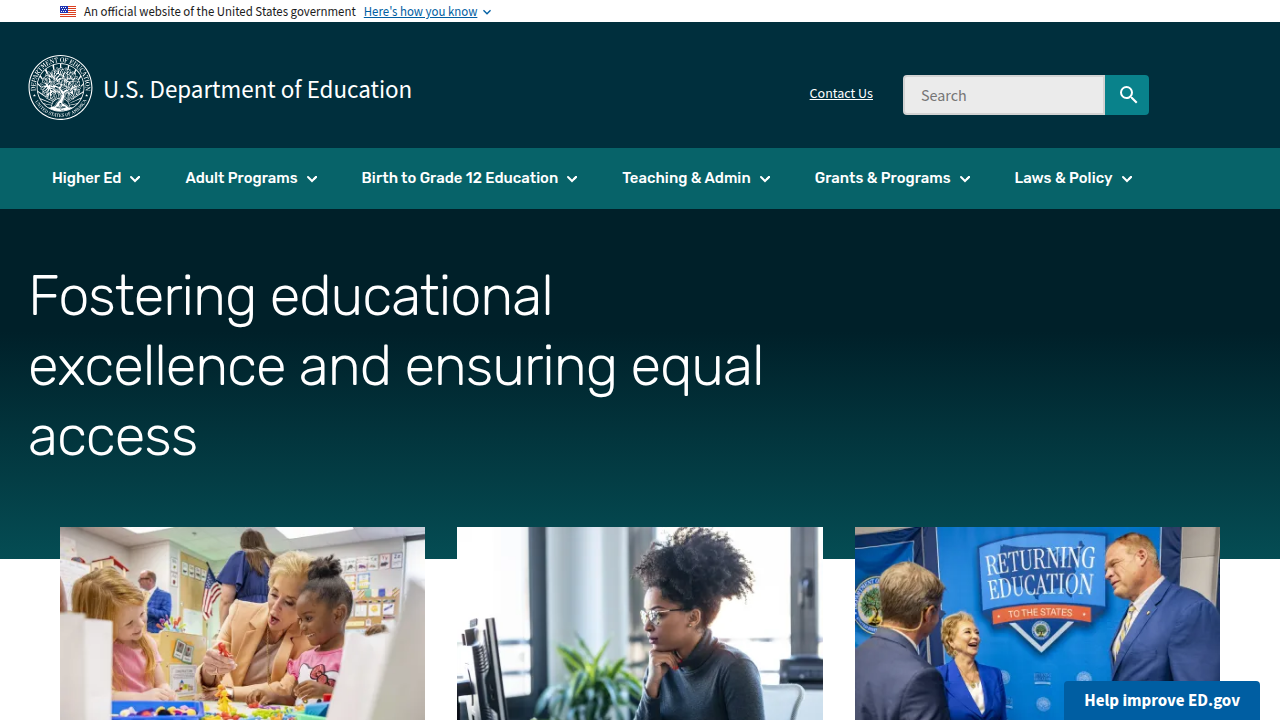
This is your first stop. Then visit the CHEA database to search for the school directly.
You can also use the Database of Accredited Postsecondary Institutions and Programs (DAPIP) run by the Office of Postsecondary Education.
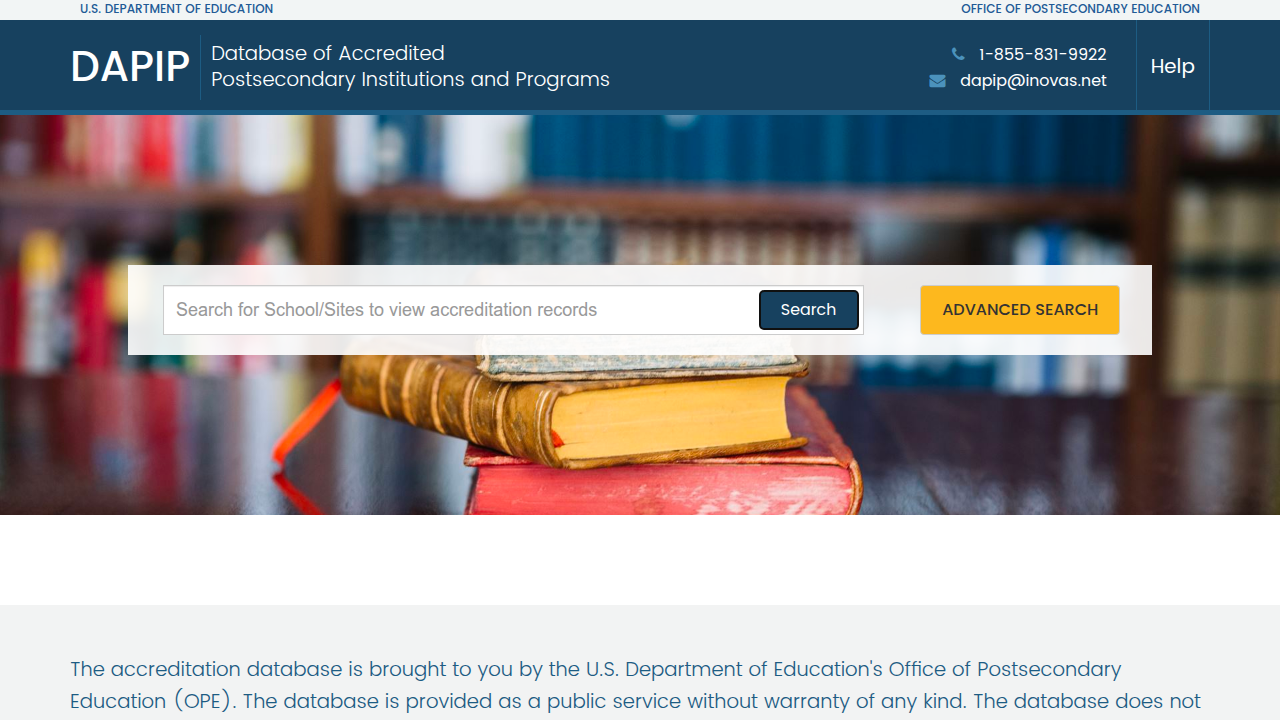
These three sources give you the truth about any school’s credentials.
Watch for these red flags
Legitimate accredited self-paced online colleges do not need to trick you into enrolling. If you see any of these warning signs, walk away:
- Promises like "guaranteed job after graduation"
- Pressure to sign up right now or "lose the discount"
- Extremely low tuition that sounds too good to be true
- No clear accreditation information on their website
- Vague or made-up accrediting agency names
A real streaming university or virtual university will be transparent about its accreditation. If you have to dig for it, that is a bad sign.
Your simple verification checklist
Use this system every time you research an online school:
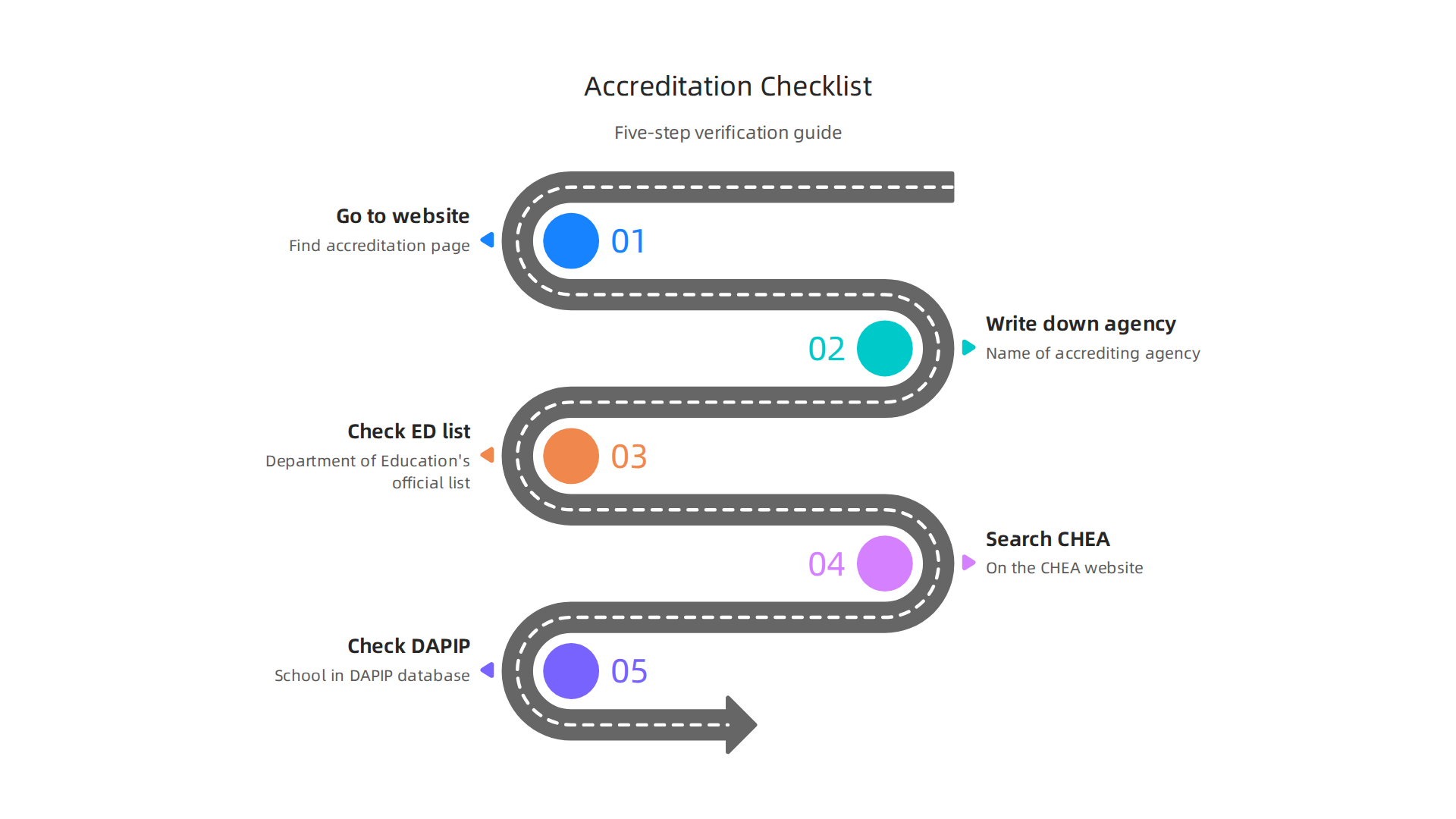
- Go to the school’s website and find the accreditation page
- Write down the name of the accrediting agency they claim
- Look up that agency on the Department of Education’s official list
- Also search the agency on the CHEA website
- Check the school itself in the DAPIP database
If the agency is not recognized by either the Department of Education or CHEA, do not enroll. It is that simple.
You can also browse databases of accredited schools like those on OEDB.org or AccreditedOnlineColleges.org.
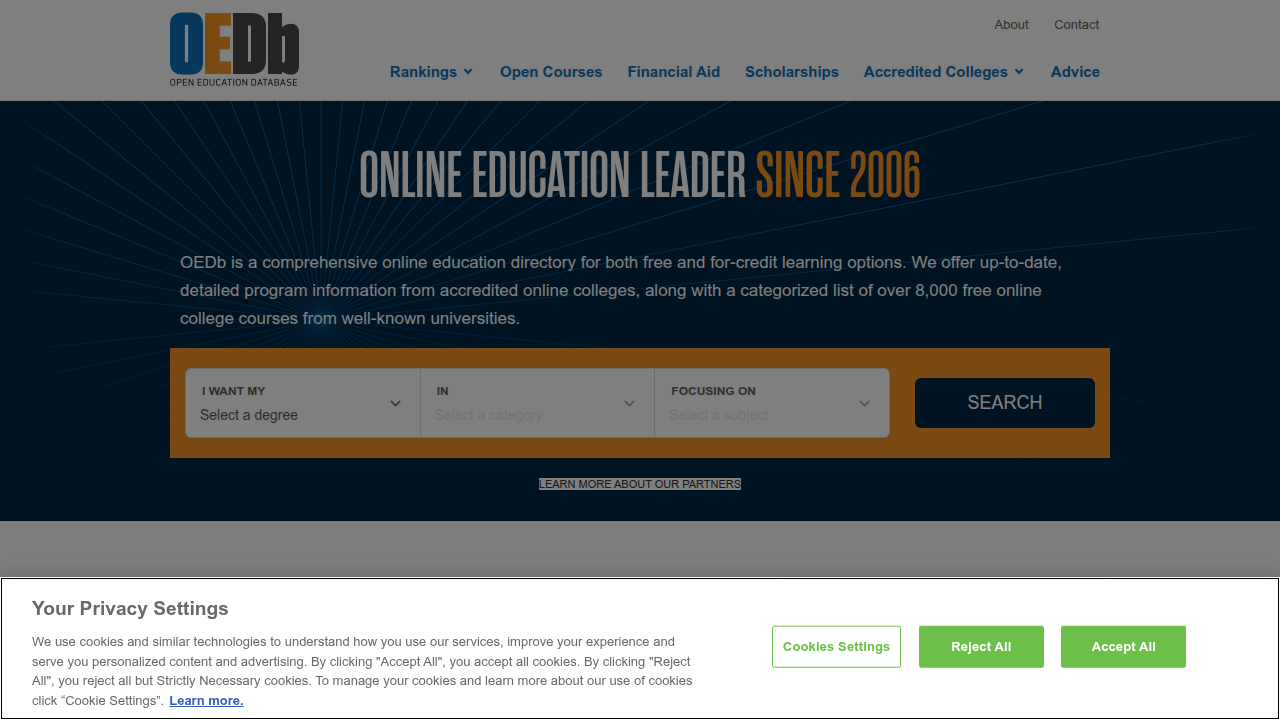
These sites only list schools that have passed proper quality checks.
Taking these steps protects you from diploma mills. A real degree from an accredited online university holds value with employers. A fake one wastes your money and sets you back.
If you want a deeper breakdown of what to look for, read our full guide on how to choose an online university for working adults that delivers results. It gives you a clear system for finding programs that fit your life and your career goals. For those focused on business specifically, our article on how to evaluate online colleges for business degree programs and avoid scams covers the extra steps you should take.
Do your homework now. It makes all the difference later.
Comparing Online Learning Models: Asynchronous, Synchronous, and Hybrid
Once you have confirmed a school is accredited, the next big choice is how you want to learn. Online universities for working adults usually offer three main formats: asynchronous, synchronous, and hybrid.
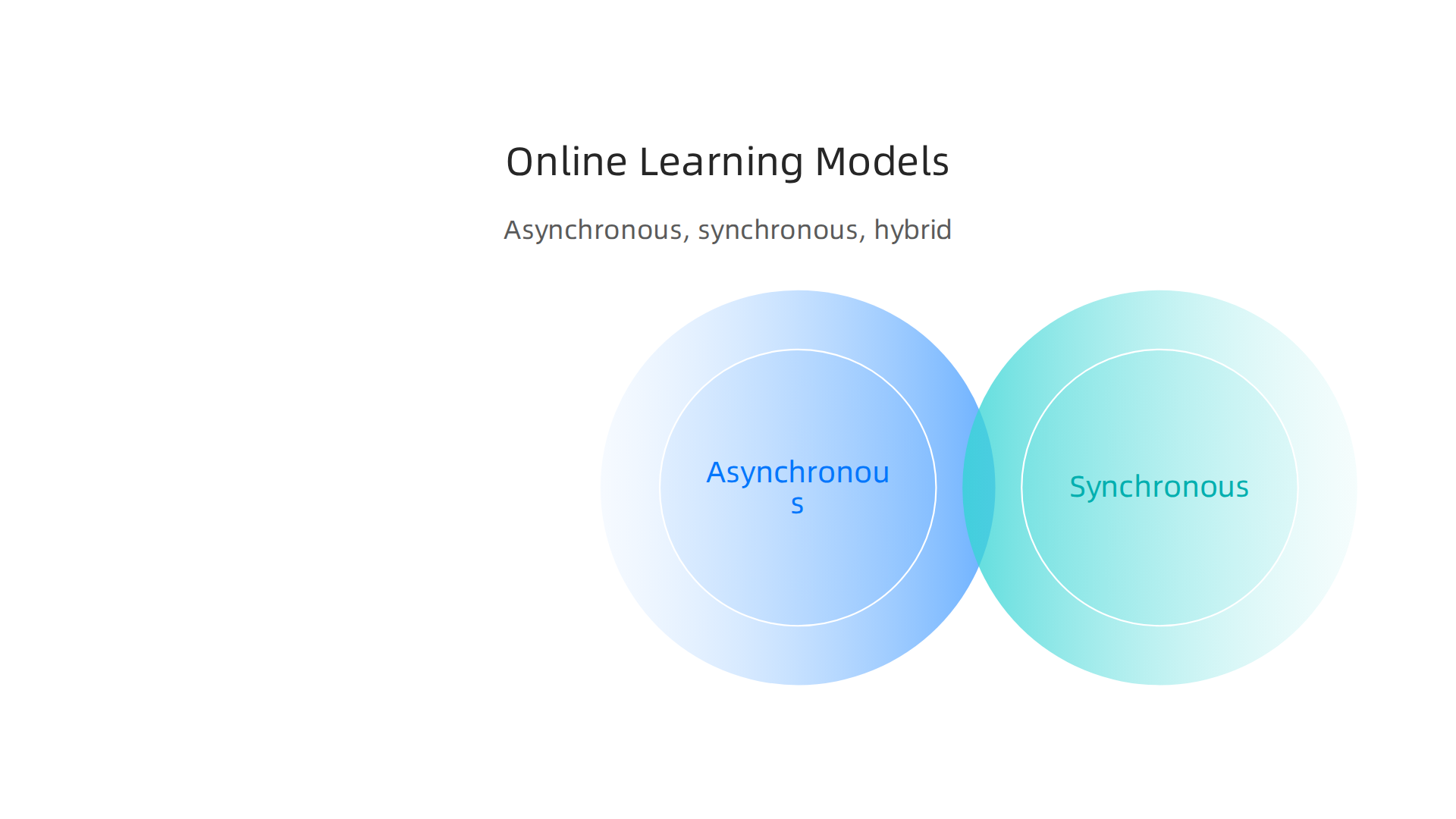
Each one fits different lifestyles and habits. Let me break them down so you can pick the right match.
Asynchronous: Learn on your own time
Asynchronous classes give you the most freedom. You watch recorded lectures, read materials, and complete assignments whenever it works for you. There are no set meeting times. This is the classic self paced online college model.
For working adults juggling a job, family, and school, this flexibility is huge. You can study at 5 AM or 10 PM. But here is the catch. It takes serious self-discipline. Research shows that adult learners in asynchronous courses often struggle with isolation and staying motivated. Instructors need to actively mentor these students to help them succeed, as one Faculty Focus article points out.
Studies comparing online learning models find that asynchronous courses can be just as effective as live ones when students stay engaged. But the lack of structure means you must manage your own schedule. If you are good at setting deadlines and sticking to them, this format can work well.
Synchronous: Real-time structure and connection
Synchronous classes happen at scheduled times. You log in for live lectures, discussions, and group work. Think of it like a regular classroom but online. This format provides a clear routine and instant feedback from instructors and classmates.
For some working adults, this structure is a lifesaver. It forces you to show up and keeps you accountable. The interaction also builds a stronger sense of community. A 2026 study published in PLOS ONE compared synchronous, asynchronous, and conventional online courses and found that synchronous formats often lead to better student engagement and satisfaction.
The downside is less flexibility. You have to be available at specific times, which can clash with work or family duties. So if your schedule changes a lot, synchronous might be tough.
Hybrid: The best of both worlds
Hybrid programs blend asynchronous and synchronous elements. You might watch recorded lessons on your own time and then attend a live weekly discussion or lab. This model gives you flexibility while still providing regular touchpoints with instructors and peers.
Many working adults find hybrid formats the sweet spot. Completion rates tend to be higher when courses include some live interaction. According to data from Ruzuku, structured cohorts with live elements can push completion rates above 80%, compared to under 15% in fully self-paced marketplaces. Research from California Community Colleges also suggests that blended approaches can improve student performance.
So if you want freedom but also need some structure, hybrid is often the best choice. It balances the strengths of both models.
Which one should you pick?
Think honestly about your schedule and personality. Do you thrive with a set routine and real-time feedback? Look for synchronous or hybrid programs. Do you need total flexibility and are comfortable working alone? Asynchronous might be perfect.
Many accredited online universities now offer multiple formats. As you research schools, pay attention to how each program delivers its courses. A good fit between your learning style and the course model can make the difference between dropping out and completing your degree.
For a deeper look at finding programs that match your needs, check out our guide on how to choose an online university for working adults that delivers results. It covers everything from accreditation to learning formats.
The True Cost of an Online Degree and How to Finance It
Now that you know which learning format matches your style, let’s talk about money. Cost is often the biggest worry for working adults looking at online universities for working adults. You might think an online degree is cheaper than on‑campus, and you are partly right. But the real picture is more detailed.
How much does an online degree actually cost?
The good news is that accredited online programs are often much cheaper than traditional on‑campus degrees. According to the National Center for Education Statistics, total online programs cost an average of about $7,997 per year. That is far less than the average for four‑year public universities.
But costs vary a lot by school and degree level. For example, some of the most affordable online master’s programs charge as little as $311 per credit hour at the University of North Georgia, as reported by BestColleges. Other schools like Fitchburg State University offer online master’s degrees for around $2,530 per year, according to OnlineU.
On the higher end, a master’s degree can cost between $44,640 and $71,140 overall, depending on the school and major, says the Education Data Initiative. So you really have to shop around.
For undergraduate programs, the average is more modest. A totally online bachelor’s program typically costs about $8,000 per year. But some accredited self‑paced online colleges charge less.
The key takeaway: online degrees can save you thousands, but only if you pick the right program.
How to pay for it
You do not have to pay for everything out of pocket. Here are three major ways to finance your online education.
1. Federal Financial Aid
If you attend an eligible school, you can apply for federal aid. Fill out the Free Application for Federal Student Aid (FAFSA). This gives you access to Pell Grants (free money) and Direct Loans (low‑interest loans). Many self‑paced online college programs qualify. Just make sure the school is accredited and participates in federal aid.
2. Employer Tuition Assistance
This is a huge resource that many working adults do not use. Did you know that the IRS allows employers to provide up to $5,250 per year in tax‑free tuition assistance? Check with your HR department. Many companies offer this benefit. It can cover a big chunk of your costs. And because it is tax‑free, you save even more.
3. Scholarships and Military Benefits
Many online schools offer their own scholarships specifically for adult learners. If you are a veteran or active duty, you may qualify for military tuition assistance or the Post‑9/11 GI Bill. Do not skip these options.
A smart next step
Before you commit, get the full cost picture. Use the tuition calculator on the school’s website. Compare total costs including fees, books, and technology charges. Then explore all your financial aid options.
For more guidance on picking a program that fits your budget and schedule, check out our detailed guide on how to choose an online university for working adults that delivers results. It walks you through everything from pricing to accreditation so you can make a smart choice.
Affordable online degrees are out there. You just need to know where to look and how to pay for them.
Strategies to Thrive as an Online Adult Learner
Paying for your degree is one thing. Finishing it strong is another. As we just talked about money, now let’s focus on how to actually succeed once you enroll.
Many adults start with enthusiasm but hit a wall by week six. Life gets busy. Work deadlines pile up. Family needs pull you away. Without a plan, even the best online universities for working adults can feel like a burden.
Here are three strategies that will help you graduate with good grades and your sanity intact.
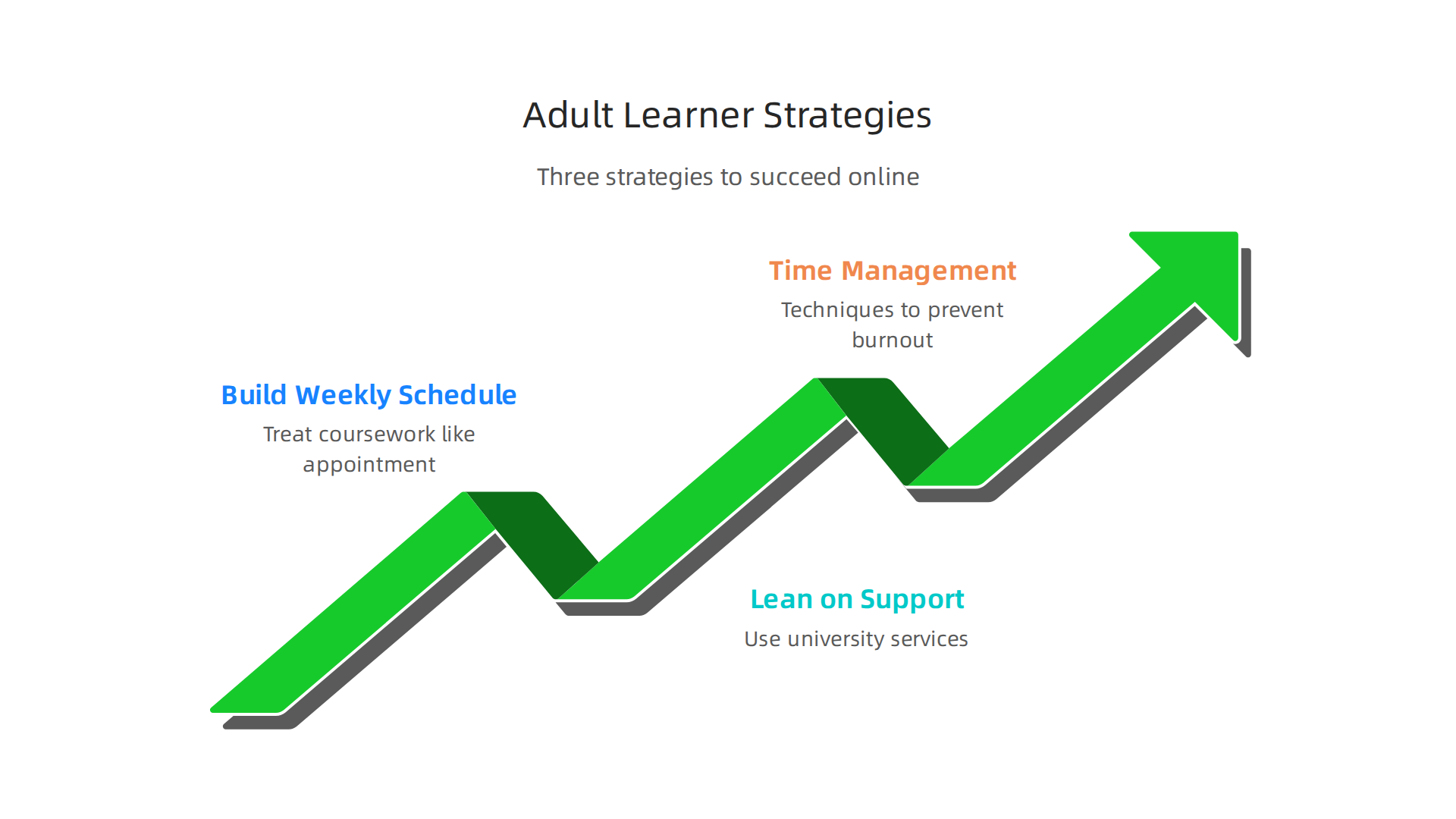
Build a Weekly Schedule That Sticks
You cannot just study when you "find time." That never works. Instead, treat your coursework like a non negotiable appointment with yourself. Block out specific hours each week, same time, same place. Write it on your calendar.
According to research, structured learning environments help drive completion rates. In some structured cohorts, completion rates are over 80 percent, compared to under 15 percent on open marketplaces. The difference is accountability and routine.
If your program is self paced online college, you have even more freedom. But that freedom can trick you into procrastinating. So create your own structure. Use a tool like Google Calendar or a paper planner. Set a recurring event for study time and do not cancel it for anything less than an emergency.
Lean on University Support Services
Here is something many adult learners forget: virtual university programs offer real support. You just have to use it.
Most schools provide academic advising, writing centers, and tutoring. Some even have dedicated peer networks for adult learners. A 2024 article in Faculty Focus highlights how mentoring adult learners through asynchronous coursework helps them overcome obstacles like confusion about deadlines or difficulty navigating the platform.
Do not be shy. Reach out to your academic advisor early. Ask about the writing center if you need help with essays. Join a study group or forum. These services exist because schools know that adults face different challenges than traditional students.
Research from PLOS ONE in early 2026 compared different online learning modalities and found that student success often depends on how well the format matches the learner’s needs. If you are struggling, your advisor can help you adjust your course load or switch to a different learning mode.
Use Time Management Techniques That Work
You do not need complicated systems. Two techniques are proven to prevent burnout.
Time blocking is great for busy schedules. Assign each task a specific time slot. For example, Tuesday 7 PM to 9 PM is for watching lectures. Thursday 8 PM to 9:30 PM is for writing discussion posts. This turns vague "study time" into a concrete plan.
The Pomodoro Technique works wonders when motivation is low. Set a timer for 25 minutes. Work hard during that time. Then take a 5 minute break. Repeat. It feels doable because you are only committing to a short sprint. Many accredited self paced online colleges even recommend this method in their orientation materials.
Also, pay attention to whether your classes are synchronous or asynchronous. A 2026 update from TheBestSchools explains that asynchronous classes offer more flexibility but require more self motivation. If you know you struggle with staying on track, choose synchronous options when possible.
Keep Your Eyes on the Prize
Success in an online program is not about being smarter than everyone else. It is about building habits that work with your life.

For more practical guidance on selecting the right program and setting yourself up for success, check out our detailed guide on how to choose an online university for working adults that delivers results. It covers everything from accreditation to cost to support services.
You have already taken the hardest step. You decided to invest in yourself. Now use these strategies to make that investment pay off.
Summary
This guide helps busy adults evaluate and choose accredited online universities that fit real life and career goals. It explains why online degrees are a strategic option in 2026—offering flexibility, lower average costs, and growing employer acceptance—and shows how to separate legitimate programs from diploma mills. You will learn where to check accreditation (Department of Education, CHEA, DAPIP), what warning signs to avoid, and how to compare learning formats (asynchronous, synchronous, hybrid) based on your schedule and personality. The article also breaks down typical costs, financing options like FAFSA and employer tuition assistance, and practical strategies to finish your degree—time blocking, Pomodoro, and using campus support services. By following the verification checklist and choosing the right format and funding, readers can enroll with confidence and increase their chances of completing a valuable, career‑relevant credential.