
Online School Programs That Prepare You for College and Career Success

Have you ever wondered if you can get a quality education without sitting in a traditional classroom? You are not alone. In 2026, the way we learn is changing fast. More students than ever are choosing online school programs to earn degrees, learn new skills, and build better careers.
The numbers tell the story. The North America virtual schools market is expected to grow by over $2.5 billion between 2026 and 2030. Right now, over 60% of students have taken at least one fully online course. These numbers show that online learning is not a passing trend. It is a major part of modern education.
So why are so many people making the switch? Online school programs offer real flexibility. You can study from home, work at your own pace, and balance school with a job or family.

Many students start with accredited online high schools and then move smoothly into college. Others go straight for a specific goal like a business administration major or an online computer science degree. The options are wide open.
But with so many choices, how do you pick the right one? You need to check if a school is accredited, if the courses fit your goals, and if the cost makes sense. This guide will walk you through everything you need to know about the best online pathways.
Making a smart decision about your future starts with good information. Let us dive in.
What Are Online School Programs?
So what exactly are online school programs? In simple terms, they are educational courses or full grade levels delivered over the internet instead of in a physical classroom. You might picture a student watching a video lecture from their bedroom, but the reality is much bigger. Online school programs include everything from fully virtual high schools to single courses that supplement what a student learns at a local school.
Think of it on a spectrum. On one end, you have accredited online high schools that offer a complete diploma. These schools provide a full set of classes, teachers, and even extracurricular activities. On the other end, you have platforms like FLVS courses, which let a student take just one subject they need extra help with or want to explore before committing to a full degree path.
This range means there is almost certainly an option that fits your specific situation.
These programs are not watered down either. Many are designed with college preparation in mind. They use a rigorous curriculum that meets the same academic standards as traditional schools. Whether you are aiming for a business administration major or an online computer science degree, the coursework can be just as challenging and respected.
The growth of these options is huge right now. The North America Virtual Schools Market is expected to grow by over $2.5 billion between 2026 and 2030. And the numbers show real participation. More than 60% of students have taken at least one fully online course, and 1 in 3 college students is now enrolled in a fully online program. The number of virtual schools in the U.S. jumped from 477 in 2019-2020 to about 726 just two years later. This is not a small shift. It is a major movement.
But here is the thing: with so many choices, you need to know what you are signing up for. Understanding the definition and scope of online school programs is the first step. Once you get that, you can compare your options smartly. If you want to avoid mistakes and pick a program that is worth your time and money, you need to learn how to evaluate them properly. A good place to start is by checking out a guide on how to evaluate online colleges for business degree programs and avoid scams. It will help you spot quality from the start.
So now that you know what online school programs are, the next question is: how do you know if one is right for you?
Types of Online Education Pathways
So now that you understand what online school programs are, let’s look at the main types you can choose from.

Each one fits a different need, and knowing the difference helps you pick the right path.
Full-time virtual high schools offer a complete diploma. These are accredited online high schools where you take all your core subjects, electives, and even honors courses. Some of the best online high schools in 2026 combine flexible schedules with expert teachers, so you can learn at your own pace [source: Prisma]. Others, like Fusion Academy, offer one-to-one instruction for students who need more personalized attention [source: Fusion Academy]. If you are a working adult looking to finish your diploma, self-paced courses give you full control over your schedule, as noted in the best online high schools for working adults [source: Excel High School]. Many private options, such as Dwight Global, also include International Baccalaureate and AP courses [source: Dwight Global].
Dual enrollment programs let high school students earn college credits at the same time. You take a class that counts for both your high school diploma and a future college transcript. This is a great way to save money on tuition later. Some states offer these through virtual schools like the New Jersey Virtual School, which delivers quality online instruction for grades 6 through 12 [source: NJVS]. Dual enrollment is also a smart step if you are considering a business administration major or an online computer science degree down the line.
Online AP courses provide college-level coursework and exams while you are still in high school. You learn material that is just as challenging as what you would see in a first year university class. Top online high school programs from providers like K12 offer AP courses alongside honors and credit recovery options [source: K12]. Passing the AP exam can earn you college credit, which means less time and money spent later.
The important thing is to match the type of program to your goals. If you want a full diploma, look at accredited online high schools. If you already have a college major in mind, dual enrollment or AP courses can give you a head start. Before you decide, it helps to know what makes a program trustworthy. To avoid scams and find quality education, check out this guide on how to evaluate online colleges for business degree programs and avoid scams. It gives you practical questions to ask before you enroll.
Benefits of Online School Programs for College Preparation
Why do so many students pick online school programs to get ready for college? It’s not just about convenience. The real value is in how these programs build the exact skills colleges look for.
Here are the top ways online learning prepares you for the next step.
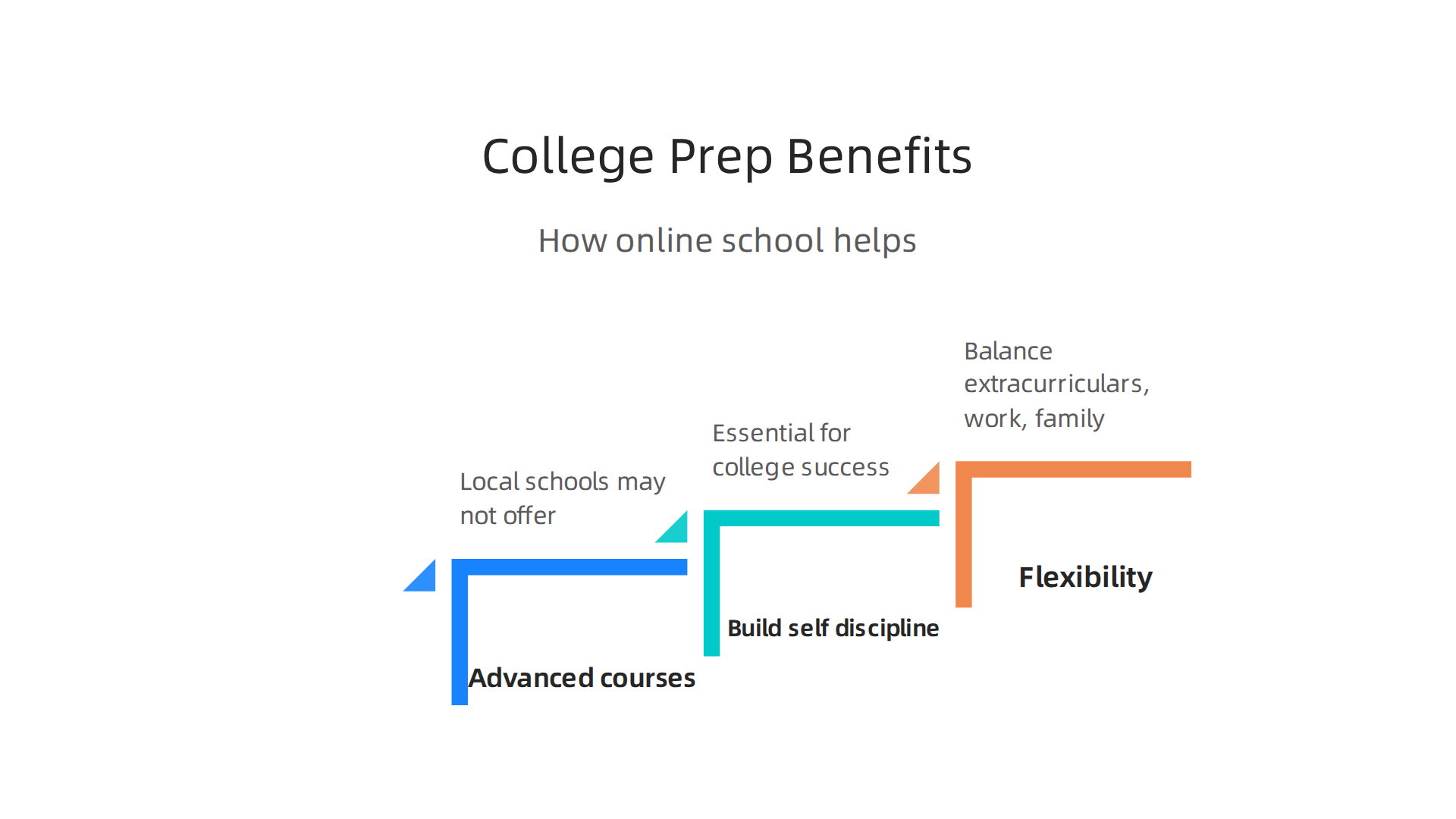
You get access to advanced courses that local schools may not offer. Many online programs include AP courses, honors classes, and even International Baccalaureate options. For example, K12 provides a wide selection of AP and honors courses that teach college-level material
[source: K12]. Schools like Dwight Global also offer IB courses taught by expert teachers [source: Dwight Global]. This means you can challenge yourself and earn college credits before graduation no matter where you live.
You build self discipline and time management skills that are essential for college. In an online setting, you manage your own schedule. No one taps you on the shoulder to remind you about a deadline. You learn to plan ahead, stay focused, and take responsibility for your progress. These habits make the jump to college much smoother because you have already practiced independent study. The best online high school programs in 2026 are designed specifically to help students develop these abilities [source: Prisma].
Flexibility lets you balance extracurriculars, work, or family responsibilities. College life requires juggling multiple priorities. Online school gives you practice now. You can complete your coursework in the morning and attend music practice, a part time job, or volunteer work in the afternoon. This teaches you how to manage your energy and time wisely. If you are also considering a future major like an online computer science degree or a business administration major, the flexibility lets you explore related courses on the side.
The bottom line? Online school programs do more than deliver lessons. They teach you how to be a capable, organized, and confident college student. To make sure you choose a program that truly prepares you for higher education, check out this guide on how to pick the right path for your career and start with a solid foundation.
Challenges and How to Overcome Them
Now that you know the benefits, let’s be real about the hard stuff. Studying through online school programs comes with some common hurdles. But the good news is that you can beat them. Here is how.
Feeling isolated is a real problem. When you learn from home, you miss the daily chatter of a classroom. One study calls this one of the biggest challenges of online learning [source: ntinow.edu]. The fix? You have to get involved on purpose. Join a study group. Use your program’s discussion boards. Look for student clubs or virtual meetups offered by your school. Many accredited online high schools now build social time into their schedule. For example, FLVS courses often include peer discussion boards and group projects that help you feel connected.
Staying motivated without someone watching over you is tough. Roughly 18 to 24 percent of online learners say it is hard to stay focused

[source: Calmu]. You might skip a lesson today and promise to do it tomorrow. Then tomorrow becomes the weekend. The secret is to build a loose structure that works for you. Set a daily start time like 9:00 AM. Use a simple checklist to mark off your tasks. You can also use a timer. Work for 25 minutes, then take a 5 minute break. This small habit helps you build self discipline without feeling trapped [source: foresttrailacademy.com].
Support from parents, teachers, and peers is critical. You cannot do this alone. In 2026, the best programs include real teachers who check in with you regularly [source: laurelsprings.com]. Talk to your parents about creating a quiet workspace. Ask your teachers for clear feedback. If you are stuck, reach out to a classmate. A little help from others can turn a bad day around. If you are a working adult exploring higher education later on, you might find it useful to read about how to choose an online university for working adults that delivers results to see how support systems translate to college level work.
The challenges are real, but they are not a reason to quit. They are just part of the learning journey. You can handle them.
How to Choose the Right Online Program
So you are ready to give online learning a shot. Great. But with so many options out there, how do you pick the right one? Do not just go with the first school you see. Take your time. Look for these three things.
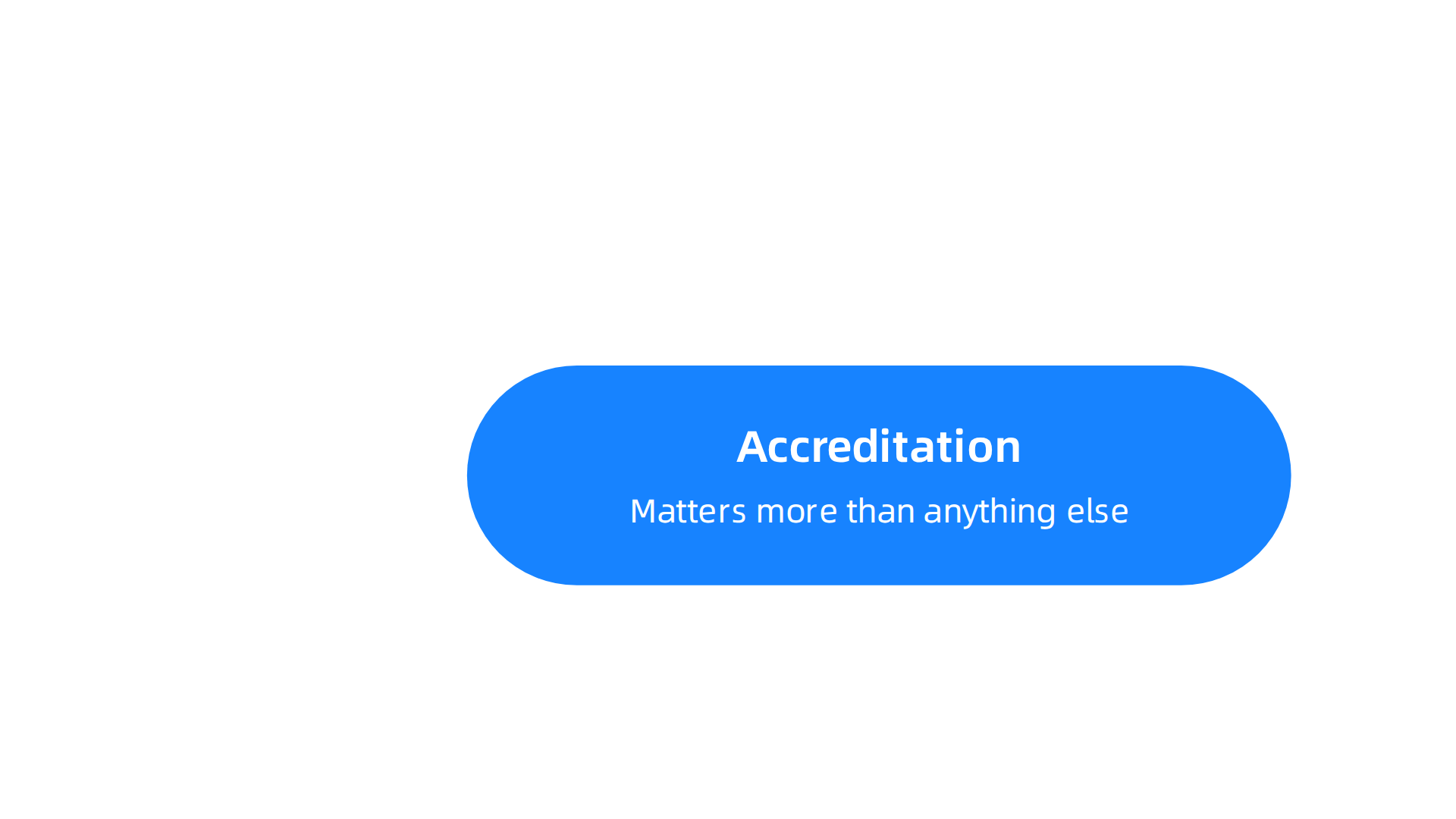
Start with accreditation. It matters more than anything else. Accreditation is not just a fancy sticker. It is a promise. When an online school is accredited, an outside group has checked its teachers, lessons, and policies to make sure they meet high standards [source: northgateacademy.com]. Why does this matter for you? Because colleges and employers look at your diploma. If your school is not accredited, they might not accept it. State universities almost always accept regionally accredited diplomas [source: schoolhub.tech]. So before you sign up, check the school’s website. Look for words like "regionally accredited" or "SACS-accredited." You can also search the school name plus "accreditation" to see if the group is a real one [source: californiaops.org]. A program like Connections Academy is one example of an accredited public school option that many families trust
[source: connectionsacademy.com]. Always verify this first. It is the most important step.
Next, check the curriculum. Does the program offer classes that match what you need? If you plan to go to college, look for courses that prepare you for college level work. For example, some online school programs allow you to take advanced math or science. Other programs offer career focused paths. Maybe you are interested in a business administration major later on. Or maybe you want to study an online computer science degree after high school. You should look for online high schools that offer related courses like accounting or coding now. FLVS courses are well known for offering a wide selection that can set you up for these future paths [source: flvs.net]. The goal is to pick a program that builds a strong base for your next step, whether that is college or a job.
Finally, look at the support services and student outcomes. A good program does not just hand you a login. It offers help. Do they have real teachers who give feedback? Is there counseling for college planning? What do other students say about the school? Check for graduation rates and college acceptance rates. These numbers tell you if the program actually works [source: joinprisma.com]. If you are still not sure how to compare schools, you might find it useful to read about how to evaluate online colleges for business degree programs and avoid scams. The same thinking applies here.
Take your time with this choice. Pick a program that is accredited, fits your goals, and supports you along the way. That is the path to success.
Accreditation and Transfer Credits
You picked an accredited online high school. That is a smart first move. But here is the thing: not all accreditation is the same. And even if your diploma is accepted, the courses you take now need to actually count later. That is where transfer credits come into play.
Why Regional Accreditation Matters Most
There are different types of accreditation. The strongest is regional accreditation. State universities almost always accept regionally accredited diplomas [source: https://schoolhub.tech/blog/online-school-programs-high-school]. If you plan to go to a four-year college later, you want a school with regional accreditation. Programs like Connections Academy are SACS-accredited, which means they meet high standards recognized by colleges across the country [source: https://www.connectionsacademy.com/program/accreditation/]. National accreditation is not as widely accepted, so always check which kind the school holds.
How Transfer Credits Work
Transfer credits are the classes you take now that can count toward a college degree later. Sounds simple, right? But different universities have different rules. Some are flexible. Others only accept credits from certain approved schools. That is why you need to ask upfront: "Do your credits transfer to state universities?" A good program will give you a clear answer.
Some online school programs even have partnerships with colleges to make the transfer process smooth. For example, FLVS courses are well known for being accepted by many Florida state schools and beyond [source: https://www.flvs.net/how-it-works/enrollment-options/full-time]. If you are aiming for a business administration major or an online computer science degree after high school, you want to make sure your math and science credits will follow you.
What to Ask Before You Enroll
Here are a few questions to ask any school you are considering:
- Is your school regionally accredited?
- Do you have a list of colleges that accept your credits?
- How do I request a transcript to send to another school?
- Do you have articulation agreements with any colleges?
If the school cannot answer clearly, that is a red flag. A transparent program will put this information on their website or give it to you in writing.
Before you decide on your next step, you might want to read more about how to evaluate online colleges for business degree programs and avoid scams. The same critical thinking applies to high school programs.
Take your time. Ask the right questions. Make sure your credits will travel with you. That way, your hard work today pays off tomorrow.
Success Strategies for Online Learners
You have picked a great online school. But now comes the real task: making sure you actually succeed. Online learning comes with its own set of challenges. Some students struggle with staying motivated, feeling isolated, and keeping up with deadlines [source: https://www.taotesting.com/blog/overcoming-online-learning-challenges-strategies-for-student-success/]. The good news is you can overcome these hurdles with a few proven strategies. Let us look at three that work.
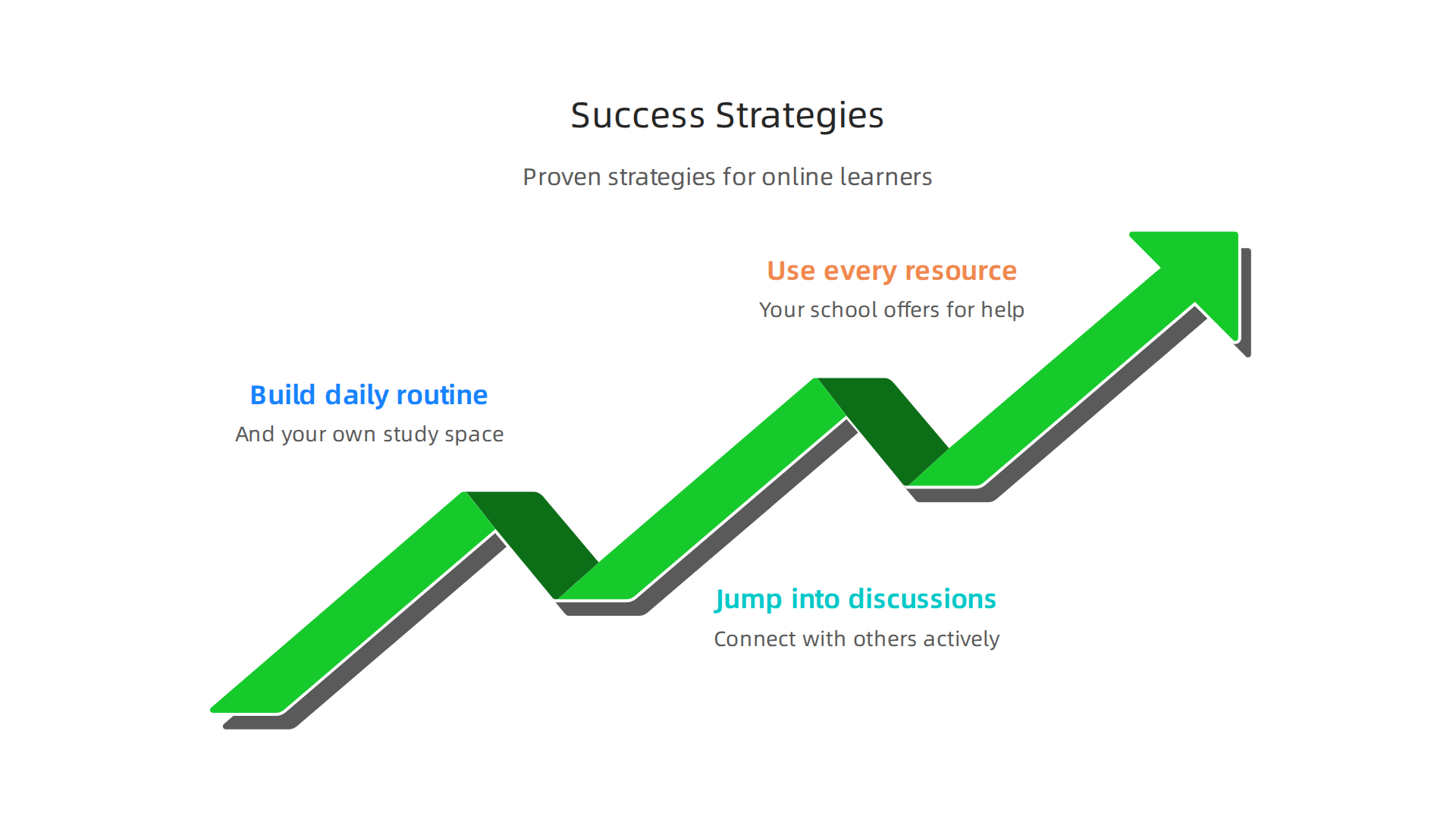
1. Build a Daily Routine and Your Own Study Space
Think of online school as a real job. You need a set time each day for class work. A structured schedule helps your brain know when it is time to focus [source: https://thrivepointutah.com/blog/master-remote-learning-game-changing-strategies]. Also, pick a quiet corner in your home that is just for studying. Keep it clean and free from distractions like your phone or TV. This space tells your mind, "It is time to learn." When you treat your online school with the same respect as a classroom, your grades will show it.
2. Jump into Discussions and Connect with Others
One big downside of online learning is feeling alone. You might miss talking to classmates. But you do not have to be lonely. Join the online discussions your school offers. Ask questions, share ideas, and reply to your peers [source: https://ntinow.edu/7-top-challenges-of-online-learning-for-students-and-solutions/]. Some programs even have group projects or study groups you can join. When you reach out, you learn more and stay motivated. Plus, working with others builds skills you will use in college and jobs later.
3. Use Every Resource Your School Offers
Your online school probably provides more than just classes. Look for tutoring help, counseling services, and academic advisors. Many schools also have writing centers or tech support [source: https://www.asuprepglobalacademy.org/news/online-learning-tips/]. Do not wait until you are struggling. Use these resources early. They are there to help you succeed. Strong critical thinking skills can also help you make the most of these tools. You can learn more about how to pick and use the best learning platforms by checking out how to choose the best online learning platforms for critical thinking in 2026.
Online school is not just about logging in. It is about being active, organized, and connected. Follow these three strategies, and you will set yourself up for real success.
Transitioning from Online High School to University
So you have finished your online high school program. Now you are looking ahead to college. Maybe you feel a little nervous. That is totally normal. But here is the truth: online school programs prepare you really well for university life.

Your Online Diploma Is Valid
Let us clear up a big worry first. Will universities accept your diploma? Yes, they will. Most colleges today treat graduates from accredited online high schools the same as any other applicant. The key is choosing an accredited program from the start. If you did that, your diploma is just as strong as one from a traditional school.
University classes are different from high school. They move faster and expect you to manage your own time. According to the University of Western Ontario, one major difference between high school and university is the need to take charge of your own learning. Online high school already taught you that skill. You know how to work without someone watching over you. That gives you a real advantage in college.
Support Services Make the Difference
The jump from high school to college can feel stressful. You might worry about harder classes or bigger workloads. But here is the thing: universities offer lots of help. Look for academic advisors, tutoring centers, and writing labs. These services are designed to help new students find their footing. A guide on navigating the high school to college transition recommends asking for help early rather than waiting until you are struggling.
And do not forget that your experience with flvs courses or other online platforms taught you how to use learning tools. Many universities now use similar systems. So you already know the basics. Transitioning to online courses in college will feel familiar.
Pick the Right University Program
Your next step is choosing the right major and university. Whether you want a business administration major or an online computer science degree, pick a program that matches your goals. You can find useful tips on picking programs that employers respect in our guide to choosing online bachelor degree programs.
Your online high school experience taught you independence, time management, and self-discipline. Those are the exact skills you need to succeed at university. You have got this.
Summary
Online school programs have grown rapidly and now include everything from full-time accredited virtual high schools to single online courses that supplement traditional learning. This article explains the main program types — full-time diplomas, dual enrollment, and AP courses — and shows how online options prepare students for college by offering advanced classes, flexibility, and stronger self-management skills. It also covers real challenges like isolation and motivation, and gives practical fixes such as routines, study spaces, and using school support services. A key focus is accreditation and transfer credits: regional accreditation matters most and you should verify transferability before enrolling. The guide walks you through how to choose a trustworthy program, what questions to ask, and the strategies that help learners succeed. By reading this, you’ll know how to evaluate options, protect your future college credit, and make a smooth transition to university.