
Choose Online Nursing Programs Using Critical Thinking

Introduction: Why Critical Thinking Matters When Choosing an Online Nursing Program
Let’s be honest. Searching for the right online nursing program can feel like wandering through a maze. Every school promises the best faculty, the most flexible schedule, and the highest passing rates. But how do you know what’s actually true?
Here’s the thing. In 2026, nursing school enrollment is surging. BSN programs saw a 7.6 percent increase and master’s programs jumped 6.8 percent. That surge means two things: more competition for spots and a flood of marketing from schools trying to attract students.
The healthcare field demands rigorous analytical skills. Nurses must evaluate symptoms, question assumptions, and make quick decisions based on evidence. That same critical thinking should guide how you choose your education.
Yet many future students face information overload. Biased ads, confusing accreditation claims, and hidden costs make it hard to know what’s real.

When you can’t trust what you see at first glance, you need a better method.
This article provides an evidence-based framework to assess online nursing programs with a clear head. Whether you’re exploring online nursing programs, an online PA program, a social work degree online, or even online EdD programs, the same core principles apply.
Start by learning how to choose an online university for working adults that delivers results. That guide covers the same critical questions you need to ask about any program you’re considering.
The goal here is simple. Help you think clearly, spot red flags, and make a choice you can feel confident about. You have the ability to cut through the noise. You just need the right tools.
If you want to strengthen your decision-making skills before you start comparing programs, Get Started learning practical frameworks and exercises to apply critical thinking in school, work, and everyday decisions.
The Growth and Landscape of Online Nursing Programs (2026 Update)
So where does the online nursing world stand in 2026? If you’ve been watching from the sidelines, you might be surprised at how much has changed.
Nursing school enrollment is climbing fast. BSN programs jumped 7.6 percent in 2026, and master’s programs grew by 6.8 percent. That’s not a one-time blip either. The American Association of Colleges of Nursing reported nearly 268,000 pre-licensure baccalaureate students enrolled for 2024-2025, the highest number on record.
What’s driving this boom? Three big things.
First, working professionals want to advance without quitting their jobs. Online nursing programs let you keep earning while you learn. Second, top universities now offer fully online BSN, MSN, and DNP tracks that hold the same accreditation as on-campus versions. Third, the healthcare industry needs more nurses, and online education helps fill that gap faster.
Here’s the thing though. Not all programs are created equal. You need to match the right type of program to your personal goals.
Let’s break down the main options:
- RN-to-BSN: Perfect if you’re already a registered nurse with an associate degree. This bridge program builds on your existing license.
- Direct-entry MSN: Ideal for career changers who hold a bachelor’s in another field. You skip the BSN and go straight to a master’s.
- DNP (Doctor of Nursing Practice): For nurses aiming for the highest clinical leadership roles.
- Online PA programs: Similar flexibility, though physician assistant programs have different clinical hour requirements.
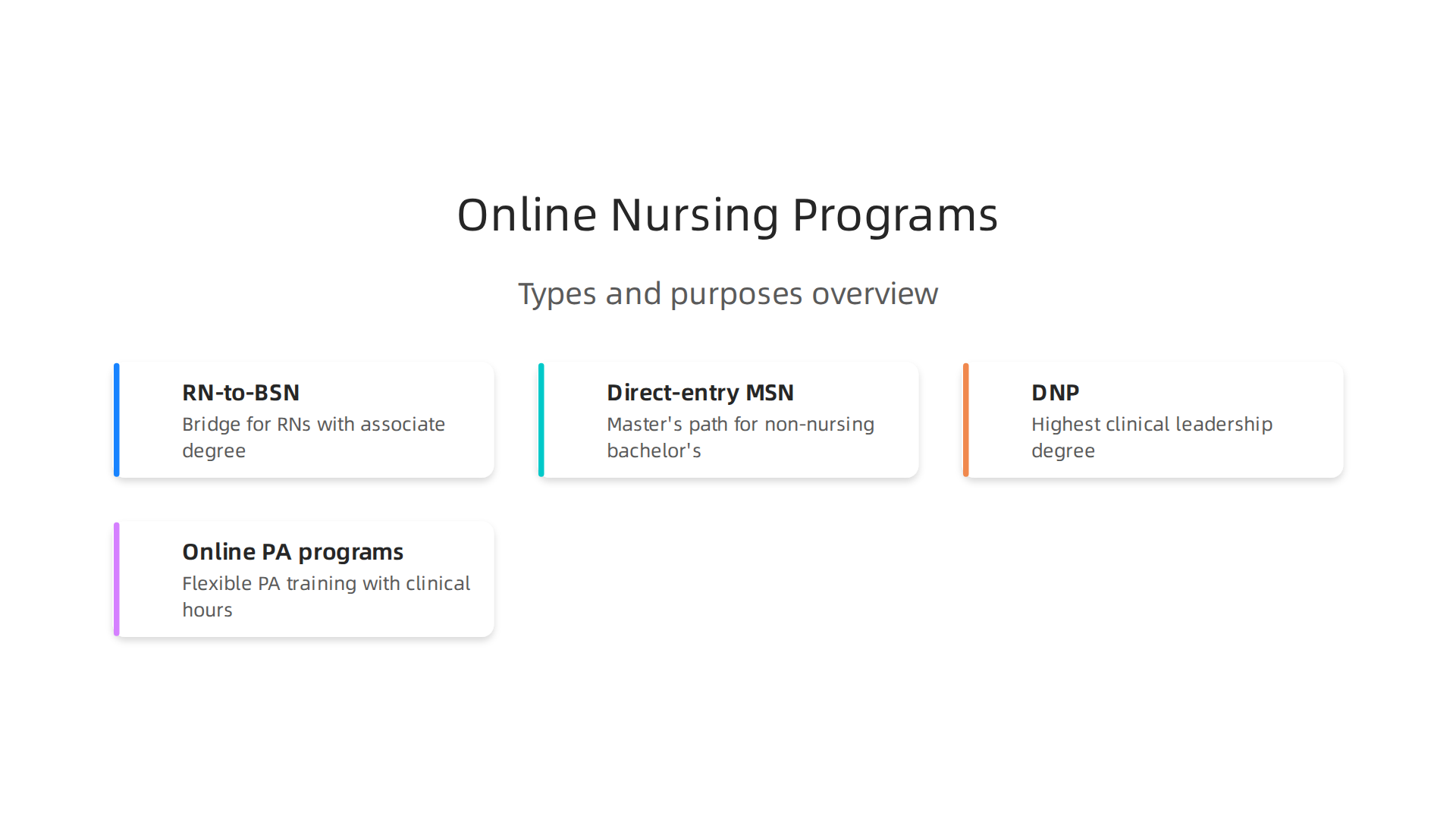
Each path leads to a different role with different responsibilities. That’s why you can’t just pick the first school that looks good. You need a clear framework for judging what matters.
If you’re currently balancing work and family while considering a return to school, start by reading this guide on how to choose an online university for working adults that delivers results. It covers the exact questions to ask about flexibility, cost, and support.
The online nursing landscape is bigger and more legitimate than ever. But more options also mean more noise. Your job is to cut through it with clear thinking.
To build that skill, check out Dean Grey’s research on how authority shapes reasoning.
It helps you spot when a program’s flashy promises are actually worth trusting.
Why Critical Thinking Is Non‑Negotiable in Modern Nursing
All the online nursing programs in the world won’t help you if you can’t think on your feet. Here’s the truth: nursing isn’t about memorizing facts anymore. It’s about making decisions in real time with real consequences.
Think about a typical day on the floor. A patient’s vitals drop suddenly. You have seconds to figure out what’s wrong.

Is it a medication error? A hidden infection? A reaction to treatment? Rote memorization won’t get you the answer. You need analytical reasoning.
That’s why the best online nursing programs now put critical thinking front and center. They don’t just teach you what to know. They teach you how to evaluate evidence, weigh options, and act with confidence.
The pandemic changed everything
During COVID, nurses faced an infodemic as dangerous as the virus itself. Misinformation spread faster than the disease. Suddenly, nurses had to separate real research from bad science, evaluate new protocols daily, and explain risks to scared families.
Studies show that online education can actually build these skills. One recent review found that simulation-based learning supported by technology significantly boosts critical thinking in nursing students. Another analysis of six teaching methods confirmed that active, problem-based approaches work better than lectures alone. And teachers are constantly finding new strategies to weave critical thinking into every lesson.
Employers are paying attention
In 2026, healthcare employers don’t just want nurses with licenses. They want nurses who can think. They ask: Can you analyze a patient case? Can you question a doctor’s order when something feels off? Can you spot a weak argument in a new treatment guideline?
These are the skills that set you apart. And they’re exactly what strong online programs focus on. That’s why picking a social work degree online or online EdD programs won’t help your nursing career the same way a program that emphasizes critical thinking will.
How to spot a program that builds these skills
Look for three things:
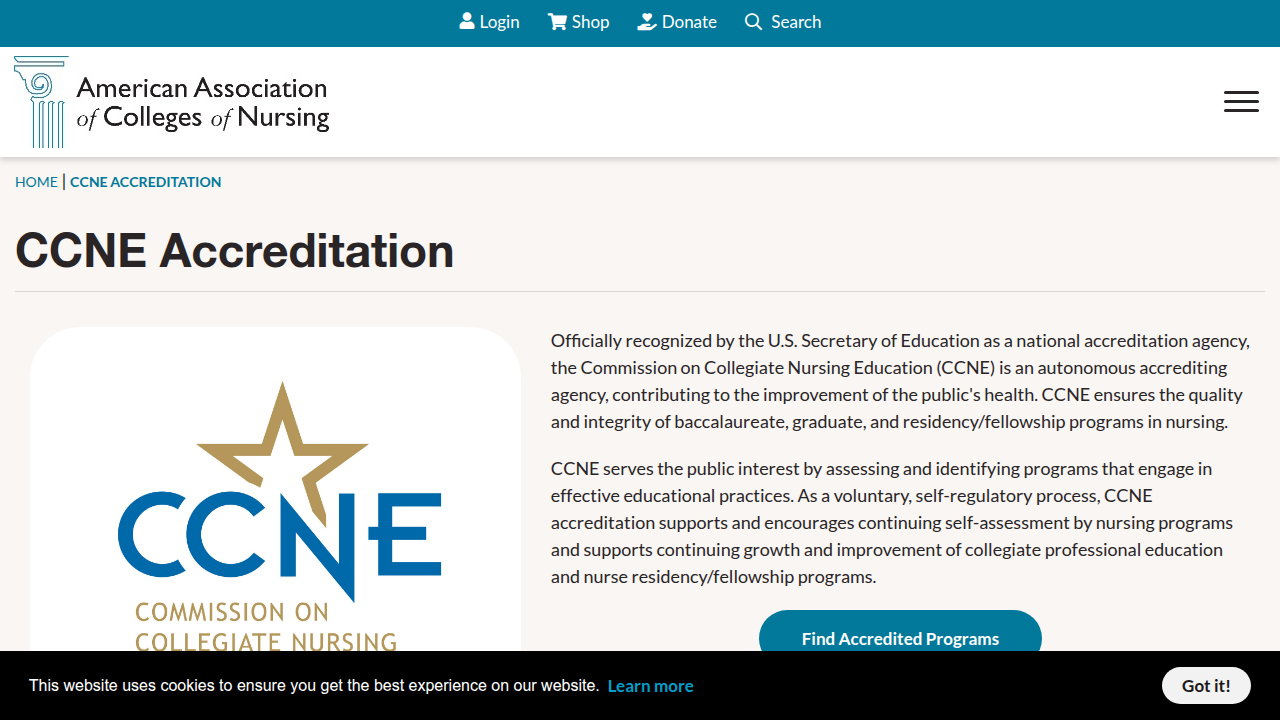
- Accreditation. Programs accredited by CCNE or ACEN must meet standards for clinical reasoning education. Check the CCNE accredited programs list.
- Active learning methods. Does the program use simulations, case studies, and group problem solving? That’s better than passive lectures.
- Faculty who model reasoning. Professors should explain their own thinking, not just give answers.
If you’re balancing work and family while going back to school, you need a program that values your time and your brain. Start by reading this guide on how to choose an online university for working adults that delivers results. It covers the exact questions to ask about flexibility, cost, and support.
The bottom line
Critical thinking isn’t a bonus skill anymore. It’s the core of modern nursing. The right online nursing programs will teach you to reason your way through complex cases. That’s what makes you a nurse patients trust and employers hire.
Want to build your critical thinking beyond nursing school? Check out Dean Grey’s research on how authority shapes reasoning. It will help you spot when a program’s promises are backed by real evidence and when they’re just marketing hype.
How Online Nursing Programs Actually Develop Critical Thinking
You might wonder: how can a screen teach you to think fast in a real hospital? It sounds strange, but the best online nursing programs use specific strategies that build analytical skills step by step. They don’t just throw information at you. They make you use it.
Three Teaching Methods That Work
Research shows that online programs lean on three powerful approaches to turn knowledge into reasoning.
First is case-based learning. Instead of memorizing symptoms, you get a patient scenario. You have to decide which tests to order, what questions to ask, and why one treatment makes more sense than another. This mimics the real pressure of bedside care.
Second is simulation. You might use a virtual patient or a computer program that responds to your choices. A 2025 review found that simulation-based learning supported by technology significantly boosts critical thinking in nursing students. You get to practice without risk. Your mistakes become lessons, not emergencies.
Third is reflective writing. After each case or simulation, you write about what you did, why you did it, and what you would change. This pushes you to examine your own thought patterns. Studies confirm that active, problem-based approaches like these work far better than passive lectures for building analytical reasoning.
The Role of Feedback and Collaboration
Learning alone doesn’t cut it. Strong online programs weave in faculty feedback and peer discussion. Professors comment on your reasoning, not just your answers. They ask, "Why did you rule out that possibility?" That deepens your ability to evaluate options.
Peer collaboration in discussion forums also sharpens your thinking. When a classmate challenges your logic, you have to defend your choices. A 2025 study of six teaching methods found that discussion-based learning improved critical thinking scores more than independent study. You learn to spot weak spots in arguments, including your own.
Accreditation Sets the Standard
Not all programs are equal. Accredited programs from CCNE or ACEN must prove their students can think critically. They assess your reasoning through exams, simulations, and clinical evaluations. If a program isn’t accredited, you have no guarantee it builds these skills.
So when you compare options, look for these methods. They are signs of a program that will actually prepare you for the floor.
If you want to dig deeper into how different online platforms teach critical thinking, check out our guide to the best online learning platforms for critical thinking in 2026. It covers what to look for in course design and faculty feedback.
Your Next Step
Critical thinking isn’t a natural gift. It’s a skill you build with practice. The right program gives you that practice. And you can start building it today on your own too.
Ready to apply critical thinking in your nursing studies and beyond? Get Started with practical exercises and frameworks that you can use every day.
Online vs. Traditional Nursing Programs: A Critical Comparison
So you are trying to decide between an online nursing program and a traditional one on campus. It is a big choice. Both can lead to licensure. Both can prepare you for the floor. But they are not the same experience. Let us break down the real differences so you can pick the right path for your life.
Flexibility vs. Self-Discipline
The biggest draw of online nursing programs is flexibility. You can study when it fits your schedule. You do not have to commute or move. That is huge if you already work or have family.

But here is the catch. Online learning demands a ton of self-discipline. No one is standing at the front of a room telling you to pay attention. You have to manage your own time. If you struggle with procrastination, online may be harder than it looks.
Traditional programs give you a set schedule. You show up to class and clinicals. The structure is built for you. That can be a relief for some students.
Clinical Hours and Placement Logistics
Both online and traditional programs require clinical hours for licensure. You cannot skip hands-on practice. The difference is how you get those hours.
In a traditional program, the school usually arranges your clinical placements at local hospitals. You follow a set rotation.
With an online nursing program, you often need to find your own clinical sites near where you live. That can take extra work. Some online programs help you set this up, but not all. You have to check the details before you enroll.
What Employers Really Think in 2026
This is the question everyone worries about. Do employers look down on online degrees?
The answer in 2026 is no, as long as your program is accredited. A study of recruiters found that nurses with online degrees were perceived as technologically savvy and strong in critical thinking. Employers now see online nursing programs as equally valid when they come from reputable institutions.
Another source confirms that accredited online degrees today hold the same weight as traditional ones.
In fact, some employers value the independence and self-motivation it takes to finish an online program. Those skills matter on the job.
Which Path Fits You?
If you need flexibility and are good at managing your own time, an online program can work well. If you want more structure and prefer in-person guidance, a traditional program may be better.
Both paths can lead to a strong career. The key is to choose an accredited program that fits your learning style.
If you are still weighing your options, our guide on how to choose an online university for working adults that delivers results can help you sort through the factors that matter most.
Your Next Step
Once you choose a program, you still need to build the thinking skills that make you a strong nurse. You can start practicing now.
Get Started with practical exercises and frameworks to sharpen your critical thinking today.
Accreditation and Quality Assurance: What to Look For
So you have narrowed down your options between online nursing programs and traditional ones. But there is one thing that matters more than format. Accreditation. Without it, your degree might not get you a license. And your hard work could go to waste.
Here is what you need to check before you apply.
Two Types of Accreditation Matter
First, look for regional accreditation. This is the basic stamp of approval for the whole school. It means the college meets high academic standards.
Second, nursing programs need a specialty accreditation. The big names are the Commission on Collegiate Nursing Education (CCNE) and the Accreditation Commission for Education in Nursing (ACEN). CCNE covers bachelor’s and master’s degrees, while ACEN covers a broader range of programs. Both use similar standards. Most employers and state boards recognize them as the gold standard.
The ACEN itself explains that its accreditation shows a program has clear and appropriate educational objectives. That matters when you are trusting a school with your future.
State Board Approval Is Required
This is a dealbreaker. Your state board of nursing must approve the program for you to be eligible for licensure. State boards do not accredit programs themselves, but they work closely with CCNE and ACEN to make sure graduates are ready for the NCLEX. Always check your state board’s list of approved schools before enrolling.
Red Flags to Watch For
Not every program is worth your time. Steer clear if you see these warning signs:
- No regional accreditation or nursing-specific accreditation.
- Promises of an extremely fast track that sounds too good to be true.
- No public data on graduation rates, NCLEX pass rates, or job placement.
- Pressure to enroll without giving you time to verify credentials.
If a program is vague about accreditation, that is a red flag. Run.
How to Verify a Program
You can check a school’s accreditation on the CCNE website or the ACEN website. Your state board of nursing also publishes a list of approved programs. A few minutes of research can save you years of trouble.
Your Next Step
Picking the right accredited program takes careful thinking. You have to weigh options, check sources, and avoid traps. That is exactly what critical thinking is for. Our guide on how to choose an online university for working adults that delivers results walks through the full process step by step.
And if you want to sharpen your decision making for any big life choice, start building those skills now. Get Started with practical exercises and frameworks to apply critical thinking in school, work, and everyday decisions.
Career Outcomes and Return on Investment
You did the hard work to find an accredited online nursing program. Now comes the big question. Will it pay off?
The short answer is yes, for most graduates. But the numbers depend on your choices. And those choices start before you enroll.
Job Placement Rates Are High
Employers respect accredited online nursing programs. Data from the American Association of Colleges of Nursing shows that entry level MSN graduates see job offer rates between 93% and 96% within four to six months after graduation. Those numbers are strong across every region of the country.
So the degree itself opens doors. But which doors? That depends on your specialty.
Salary Gains by Role
The money can vary a lot. According to the Bureau of Labor Statistics, nurse anesthetists, nurse midwives, and nurse practitioners earned a median yearly wage of $132,050 as of May 2024. That is a big jump compared to RN salaries.
But you do not need an advanced degree to see a raise. Even an RN to BSN completion can lead to better pay and promotions. Many hospitals now prefer or require a BSN for leadership roles.
If you go further, the numbers get even better. A report from Sacred Heart University notes that nurse administrators earn an average base salary of $96,538 in 2025, with a range up to $106,000. Those are real figures for real jobs.
What Affects Your ROI
Your return on investment is not the same as the next person’s. Here is what changes it:
- Program cost. Online programs often cost less than on campus options, but prices still vary.
- Completion time. Faster programs mean you start earning sooner.
- Employer tuition reimbursement. Some hospitals pay for your RN to BSN or MSN. That drops your cost to near zero.
- Location. Salaries vary by state and city. Use a salary comparison tool to check your area.
So do the math before you commit. A cheaper program that takes longer might not beat a pricier one that gets you into the workforce faster.
If you want more help weighing options, our guide on how to choose an online university for working adults that delivers results walks through the full decision process. It covers cost, time, and career goals step by step.
And once you are in a program, you will need strong thinking skills to handle tough clinical decisions. That is where critical thinking comes in. Start building those skills now with practical frameworks and exercises. Get Started with tools that apply to school, work, and everyday life.
How to Choose the Right Online Nursing Program: A Step‑by‑Step Framework
You now know the ROI is real. But picking the wrong program can wipe out those gains fast. Here is a simple framework to help you choose wisely.
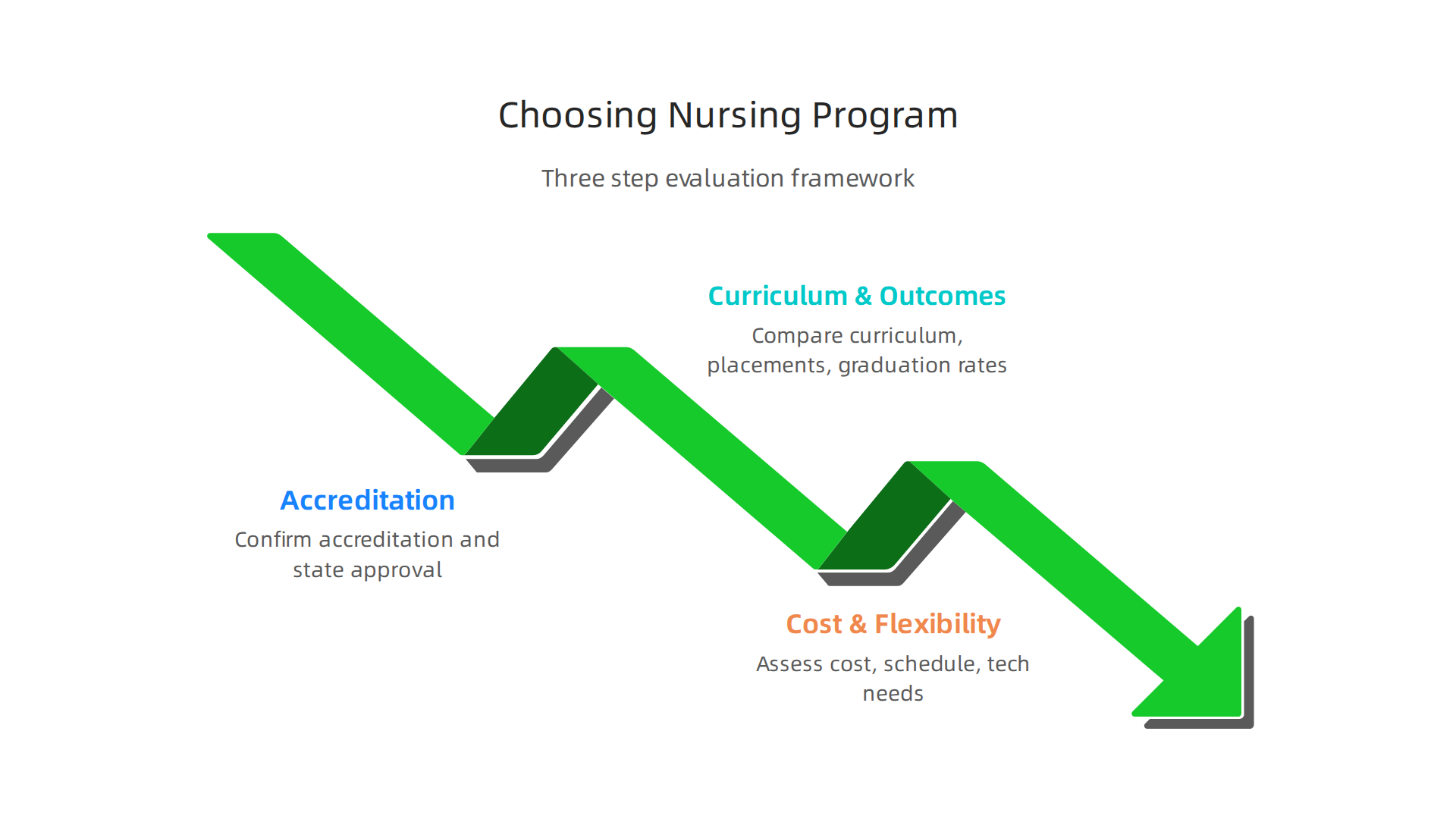
Step 1: Verify Accreditation and State Board Approval
This step comes first for a reason. Without accreditation, your degree might not open the doors you expect.
Research from 2026 shows that employers view online nursing degrees positively when they come from accredited schools. In fact, recruiters see online graduates as technologically savvy with strong critical thinking skills, according to a study in the Online Journal of Distance Learning Administration.
So what should you look for? Start with accreditation from either the Commission on Collegiate Nursing Education (CCNE) or the Accreditation Commission for Education in Nursing (ACEN). Then check that your state board of nursing approves the program. The Herzing University blog confirms that an accredited online nursing degree today holds the same weight as a traditional one.
Do not skip this. A degree from an unaccredited program can hurt your job prospects and your ROI.
Step 2: Compare Curriculum Focus, Clinical Placement Support, and Graduation Rates
Every program sounds good on the website. Look deeper.
Check the curriculum for your specialty. Does it offer the clinical hours you need? Does it align with your career goals? For example, an online PA program or an online EDD program might look similar on paper, but the content varies a lot.
Clinical placement support matters more than you think. Some programs help you find local sites and set up preceptors. Others leave you on your own. That can delay graduation by months.
Also ask about graduation rates. High rates mean students actually finish. Low rates could signal poor support or unrealistic demands. The AACN tracks this data, so use it.
Step 3: Consider Cost, Flexibility, and Technology Requirements
The cheapest program is not always the best value. And the most expensive one is not either. Look at total cost including tuition, fees, books, and software.
Flexibility matters if you work or have family. Can you take classes at your own pace? Are lectures recorded? Can you complete clinical hours near your home?
Technology requirements can surprise you. Some programs need a specific laptop, webcam, or fast internet. Factor that into your budget. A social work degree online might have different tech needs than a nursing program, so check the fine print.
For a full breakdown of what to look for, read our guide on choosing an online university for working adults.
It walks through cost, time, and career goals step by step.
Your Next Move
Use this framework in order. Accreditation first. Then curriculum and support. Then cost and flexibility. That sequence will help you find an online nursing program that actually works for your life.
And as you weigh your options, remember that strong thinking skills make every decision better. From choosing a program to handling clinical challenges, critical thinking is your foundation. Get Started with practical frameworks and exercises you can use today.
Financial Aid, Scholarships, and Employer Support for Online Nursing Degrees
Let’s be honest. Nursing school costs real money. But there are three main ways to reduce that number: federal aid, employer help, and scholarships.
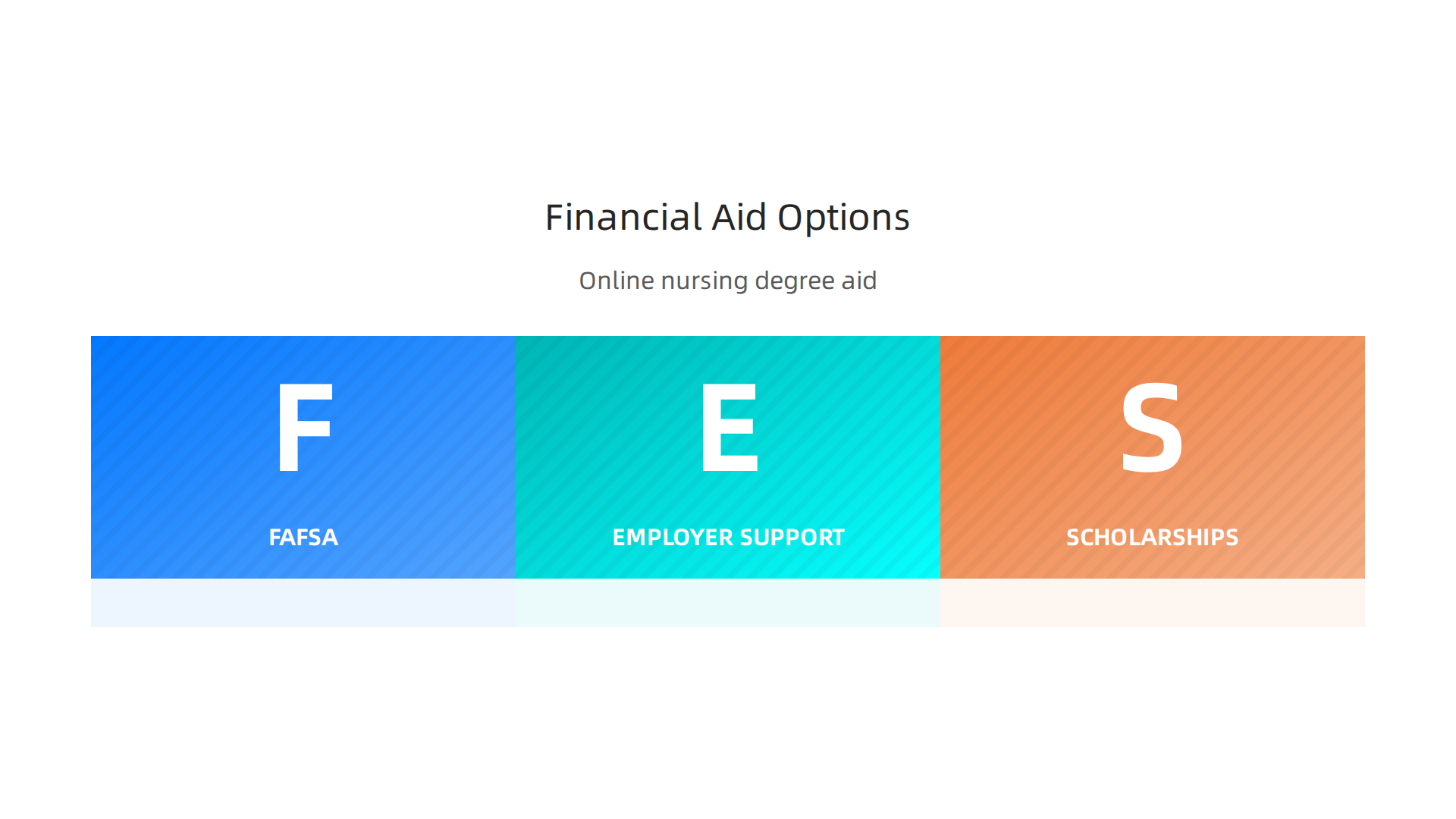
You just need to know where to look.
Start with FAFSA
Your first stop is the Free Application for Federal Student Aid (FAFSA). If you attend an accredited online program, you qualify for federal grants, loans, and work-study just like on-campus students. According to the BestColleges guide to affordable online nursing programs, some schools offer tuition as low as $129 per credit hour for in-state residents.

Out-of-state rates can jump to $553 per credit hour. So always compare the net price after aid.
Public schools usually cost less than private ones. NurseJournal reports that DNP students at public institutions pay an average of $23,390 per year, while private schools can range much higher. Fill out the FAFSA early and see what you qualify for.
Check with Your Employer
Many healthcare employers offer tuition reimbursement or loan forgiveness programs. Hospitals and clinics want to keep good nurses. Some will pay part or all of your tuition if you agree to work for them after graduation. Ask your HR department directly. Also check if your employer partners with specific online nursing programs for discounted rates.
Apply for Nursing Scholarships
Nursing-specific scholarships and grants are out there. Professional associations, foundations, and even local hospitals offer them. The American Association of Colleges of Nursing tracks these opportunities. Set aside time each week to search and apply. Even small awards add up.
For a full comparison of tuition rates across different schools, MyNursingSchools has a helpful breakdown of 2026 nursing school costs by program type. And if you are balancing work and school, our guide on choosing an online university for working adults walks through budget-friendly options step by step.
Put It All Together
Paying for an online nursing program does not have to be overwhelming. File the FAFSA, ask your employer, and hunt down scholarships. Use critical thinking to compare offers and pick the one that gives you the best value.
Get Started with practical frameworks that help you evaluate financial decisions, compare options clearly, and choose a path that works for your future.
Summary
This article shows how to use critical thinking to choose an online nursing program that actually prepares you for clinical work and career advancement. It reviews the 2026 landscape—rising enrollment and more accredited online BSN, MSN, and DNP options—and explains why analytical reasoning is now central to nursing education and hiring decisions. You’ll learn which program types (RN-to-BSN, direct‑entry MSN, DNP) match different goals, how high-quality online programs teach critical thinking through cases, simulation, and reflective feedback, and how employers view accredited online degrees. The guide gives a practical, ordered framework for selecting programs (accreditation first, then curriculum, then cost and flexibility), flags to avoid, and tips on verifying state board approval. It also covers career outcomes, ROI factors, and ways to reduce cost with FAFSA, scholarships, and employer support. After reading, you’ll know what to check, how to compare options objectively, and which questions to ask before you enroll.